Fall 2025
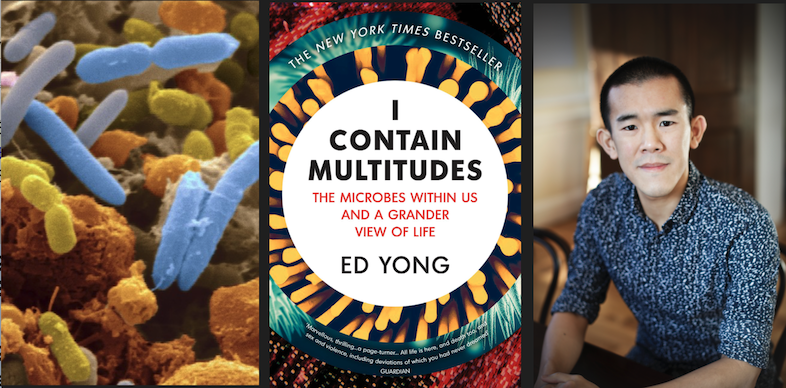
I Contain Multitudes: The Microbes within Us and a Grander View of Life, Ed Yong, 2016.
I am late to this book. I’ve had it for years, and, lately, have kept moving it deeper into the to-be-read stack in the belief that something newer — in what is obviously a rapidly evolving field — will appear. But nothing had as yet, my curiosity is unabated, and my friend Rachel wanted to read it as well, so here we go.
In Summary
I very much enjoyed this book. Fascinating material, and although it is about 10 years old now (a long time in the world of science), I felt like I was getting a very up-to-date picture. Certainly, I’m not aware of any more recent book for the general science-loving reader on this topic.
I will note that I liked it significantly more the Immense World, though I enjoyed and recommend that as well. I think the difficulty with writing this kind of book is how to organize it coherently. Sometimes one can take a temporal path through an area, if there is a strong theme or through-line (as in The Tangled Tree, Quamann or The Master Builder, Arias), but I don’t see that as possible here, where the topic is incredibly broad: microbes, individually and in community, and their interaction with other organisms. I thought Yong did as well as possible (and it is where I feel Immense World fell a little short).
Detailed chapter-by-chapter notes follow, but at a high level this is the arc of the book.
The first chapter establishes core concepts: microbiomes as ecosystems, and their variation across body sites and individuals. The second chapter provides a capsule microbiology.
Next the book turns to ways in which microbes shape the development of their hosts, and the ways hosts, in turn manage their microbiome. In typical Yongian fashion, this is done through a series of example organisms that range from the Hawaiian Bobtail squid (with its light organs manned by microbes that it encases in its body), to the important role of mucus in more complex organisms) in keeping microbes in their proper places.
The book then pivots to a discussion of dysbiosis, a situation in which the entire microbial ecology changes in a way that is problematic for its hosts – the leading example here are the microbiomes of coral reefs. It’s a fascinating example. This segues into a discussion of the function of microbiomes (rather than individual microbes) and their diversity (or poverty) over time, and their distribution through populations.
After this, I feel like I lose the thread of the book. The subsequent chapters take up interesting topics, but is seems to me more like, having laid the foundations and established the basics of the phenomenon, it turns to special topics. This is still very much worth reading, but except at ending up at possible real-world applications, I feel like that narrative arc falters.
The Book
Prologue: A Trip to the Zoo
A very ‘soft’ beginning, describing a researcher sampling a pangolin for its skin microbiome. We’ve got a cute animal, comments from a scientist, and an introduction to the basic idea that all living things host ecosystems of microbes that play a variety of surprising roles.
C1: Living Islands
Chapter 1 begins laying the groundwork, sketching out the evolutionary history of life — emphasizing the microbes have been around far longer than any life form — and laying out the basic forms of life: archae, prokaryotes, and eukaryotes.
- Human vs. Microbiome Cell/Genes. There are roughly as many microbial cells in the human body as human cells, although this is still somewhat speculative. The human genome consists of 20 – 25 thousand genes; the human microbiome has 500x as many.
- There’s a recap of Alfred Russel Wallace’s voyage, and his claim that: “Every species has come into existence coincident in space and time with a pre-existing closely allied species.“
- No core human microbiome. Scientists initially hoped to identify a core microbiome that was the same from human to human, but that has not held up. At most, there may be said to be a core of functionality that the human microbiome consists of.
- Variation in the Human Microbiome. The human microbiome varies more between body parts than between humans. The human microbiome also varies in time, from birth to death. The books suggests it follows stages of succession, but all the text says here is that it takes a baby’s microbiome about three years to become an adult one.
- Given that microbiomes provide essential functionality to animals, etc., what does it mean to be an individual.
Looking ahead to some themes that will be pursued in later chapters:
- Many conditions from disease (diabetes, colon cancer) to other maladies (autism, obesity) appear to be correlated with the makeup of the microbiome, though of course causality is not clear.
- Organisms that exhibit convergent evolution in their behavior (e.g., ant-eating animals) also exhibit converence in their microbiomes.
- Perhaps health problems may be re-envisioned as ecological problems at the microbial level.
- In some cases microbial genes can permanently inflitrate the genome of their host organism.
…reading break…
C2: The People Who Thought to Look
A brief history of microbiology. Microscopy, microbes, et al.
C3: Body Builders
[microbial modulation of hosts’ development]
- Hawaiian Bobtail squid have two chambers on their undersides that produce luminescence that protects them by eliminating their silhouette at night when seen from below. The luminescence is produced by bacteria — V. Fischeri — that colonize the chambers shortly after birth.
- Development of the squid’s luminescence organ is induced by bacteria. The Bobtail squid chambers are covered with mucus and cilia. When a V. Fischeri first makes contact, nothing happens, but when five or more make contact that triggers the expression of genes that produce a cocktail of anti-microbial substances that kill of everything but V. Fischeri . Other enzymes break down the mucus and produced substances that attract even more V. Fischeri . Eventually the V. Fischeri migrate down pores to spaces lined with pillar like cells that envelope the V. Fischeri , and the luminescent ‘organ’ reaches its mature form. What is interesting here is that the development of the squid occurs in a dialog of genetic expression with V. Fischeri
- MAMPs – Microbial-associated Molecular Patterns. Not sure why the term “patterns” is used. But in general it applies to substances released by microbes that impact, for good or for ill, a host organism. It is now clear that many organisms develop under the influence of microbial partners, often using the same molecules that the squid’s V. Fischeri produces.
- Germ-free organisms. Organisms that are isolated and raised in a completely sterile environment are often only marginally viable and require artificial substitutes for what microbes would produce.
- Microbial triggered gene expression. We can see that microbes often trigger gene expression (e.g., in the gut) that leads to the creation of blood vessels, and structures that aid the intake of nutrition and maturation of cells.
- Choanoflagellates (choans) — S. rosetta. These are water-dwelling eukaryotes that prey on bacteria; Choans are the closest living relatives of all animals. Under certain conditions Choans can aggregate into colonies of about 20 organisms, growing a connecting sheath the binds the separate organisms into a sphere; it turns out that the colonial form is more effective at catching food. The formation of colonies turns out to be triggered by a bacterium, which causes the choan to release a molecule that triggers the formation of the colony.
- Squggly worms — H. elegans and P-luteo. H. elegans begin as larva; they only attach to a surface and mature when they encounter a biofilm, and this in turn is induced by a particular bacterium referred to as P-luteo. The ocean is swarming with larval animals that only mature when they encounter bacteria, often P-luteo.
- The ubiquity of bacteria. A repeating theme here is that it’s not surprising that more complex organisms rely on bacteria — bacteria were ubiquitous when the complex organisms evolved, and it makes as much sense to make use of them as any other feature of the environment.
- Bacteria and the immune system. Bacteria play a crucial role in tuning the immune system. Microbes both influence the production of inflammation producing cells as well as anti-inflammatory cells.
- Spotted hyenas and bacteria-mediated scents.
- Microbes and behavior. Changing a mouse’s microbiome can change its behavior. It can make them more or less anxious, and more or less depressed. There is speculation that this may be true for humans as well, and interest in developing “psychobiotics.”
…reading break…
C4: Terms and Conditions Apply
[Mucus, Mile, and the Immune System: Managing the microbiome]
- Wolbachia reproduces by inserting itself in its host’s female eggs. Over time it has developed many methods of increasing the female/male ratio. This is probably the most successful bacterium outside of the ocean.
- Prochlorococcus — so numerous that 1 ml of seawater contains 105 bacteria. Produces about 20% of O2
- “Certain bacteria can even turn their owners into magnets for malarial mosquitoes, whilst others put off the little bloodsuckers. Ever wonder why two people can walk through a midge-filled forest and one emerge with dozens of welts while the other just has a smile? Your microbes are part of the answer.”
- Symbiosis doesn’t mean “mutually beneficial.” Symbiosis means organisms that live together; but this doesn’t mean that they are necessarily mutually beneficial. It can be largely good, largely bad, a tradeoff, and, most importantly, the cost/benefit ratio and degree of symmetry can very over time.
- Interesting example: Acacia trees prevent their ants from using other types of sugar.
- SIRS — Systemic Inflammatory Immune Rsponse. Sepsis occurs when our ordinarily beneficial bacteria get into the wrong places.
- Bacteriocytes Insects have special ‘containers’ for housing and controlling bacterial symbiotes.
- Mucus. In vertebrates most bacteria are kept out of cells (e.g. within the gut)) and mucus (made of giant entangled mucin molecules) is used as a protective barrier.
- Mucus provides an environment for Bacteriophages — viruses that infect bacteria — love mucus. It’s hypothesized that animals can alter the composition of their mucus to recruit particular phages.
- AMPs. The inner layer of mucus also contains AMPs(antimicrobial peptides) which kill bacteria. Particular AMPs are released in response to the presence of bacteria.
- Immune cells. Finally, on the other side of the mucus barrier there are lots of immune cells which ‘reach through’ the mucus barrier to sample the bacteria on the outside.
- Immune system as management rather than protection.
Claim: Our immune system has evolved to manage our microbial community — warding off disease is just a useful side effect. - Establishment of microbiome. Babies are vulnerable to infection for their first six months not because their immune systems are immature but because they’ve been suppressed to allow establishment of the microbiome.
- Mammalian milk is an important way of controlling the microbiome— human milk contains over 200 HMOs (Human Milk Oligiosaccarides). But humans can’t digest the HMOs—rather they are food for a particular gut bacterium: b infants. B infant is in turn produces short chain fatty acids that nourish infant gut cells and stimulate them to produce adhesive proteins and anti inflammatory molecules.
…reading break…
C5: In Sickness and in Health
[Dysbiosis–Diseases as ecosystem turnover]
Reefs
- Reef microbiomes. Reefs are covered with microbes — 10x more than an equivalent area of human skin: 100 million/sq cm.
- Colonization resistance: Most microbes occupy space, so if a reef has been colonized by ‘good’ microbes, there is little room for the ‘bad’ microbes to move in. If you disrupt the microbiome, bad microbes can move in.
- Fleshy algae vs. coral. Reef microbiology has to do with a balance between coral organisms and fleshy algae. Fleshy algae are kept in check by ‘grazers’ like parrot fish and surgeonfish. If humans eliminate sharks, it causes a population explosion in mid-sized fish, who then decimate the grazers. Similarly, humans can kill the grazers directly by hunting/fishing them. Either way, that removes limits on fleshy algae, which proceed to take over the reef by consuming all the oxygen and smothering the coral organisms.
- Sharks as energy stores. A single shark contains the stored energy equivalent to that in several tons of algae. If sharks are eliminated, that energy — in the form of DOCs (dissolved organic carbon — carbohydrates and sugars) – is available to the microbes, which bloom and extract all the oxygen in the water.
- Coral death. Corals are rarely killed by exotic organisms, but rather by parts of their own microbiome which have experienced explosive growth due to DOCs. As coral organisms die it creates more space for algae and other micro-organisms, leading to a positive feedback loop that kills the reefs.
- Reef death. A coral reef can die incredibly quickly, within a year.
- Black reefs. A wrecked boat containing iron can stimulate the growth of fleshy algae (for whom iron is a limited resource) to the extent that even grazers can not keep it under control. Even a single iron bolt can form a miniature black reef around it.
Dysbiosis
- Dysbiosis. In cases like these, the cause of a reef’s demise is not a single organism, but rather a turnover of the ecosystem where it shifts into a pathogenic state. This is a different paradigm for disease that contrasts with the invasion of a single foreign pathogen: it is disease as an ecological problem.
- Germ-free Mice. Germ free mice can eat as much as they like and not gain weight. If they are given a microbiome, they eat no more but become better at extracting energy and put on weight.
- Lean vs. Fat. The microbiomes of fat organisms differ from those of non-fat organisms. Transferring a ‘fat’ microbiome to a germ-free mouse will make it fat; transferring a ‘lean’ microbiome to a germ free mouse (or fat mouse) will make it lean.
- Gastric bypass surgery reconfigures the microbiome.
- Microbiomes + Nutrients. It is not just the microbiomes, but the nutrients that an organism has access to. Particular types of nutrients will favor particular types of microbiomes.
- Dysbiosis ➔ Inflammatory diseases. It appears that a lot of diseases which are associated with inflammation — IBD (inflammatory bowel disease); Type I diabetes; Multiple Sclerosis; allergies; asthma; rhumetoid arthritis – may be due to dysbiosis.
- Causes of dysbiosis. One hypothesis is that overly hygienic environments produce organisms with immune systems that are too ‘jumpy.’
- Countering dysbiosis. (1) Dogs and to a lesser degree cats, introduce a wider variety of microbes into modern homes, which may strengthen the immune system. (2) Likewise, mother’s milk (as seen in the last chapter) introduces a varied microbiome. (3) Fiber in the diet is broken down into SCFAs (short chain fatty acids) and triggers the production of anti-inflammatory cells.
Microbiome Diversity
- Generational microbiomatic poverty. An impaired microbiome can be passed along to the next generation. Continued encounters with diversity-decreasing effects (e.g. high fat diet’; antibiotics; etc.) can continue such trends.
- Antibiotics. Antibiotics have long lasting effects on the microbiome.
- Microbiome diversity. Inhabitants of third-world countries, and members of hunter-gatherer tribes, have far more diverse microbiomes (which could also be due to other factors like fiber, low-fat diets, breast feeding, hygiene). Other primates such as chimpanzees, bonobos and gorillas have more diversity than any human.
- Microbiome dynamics. The microbiome varies over time, both longer term — e.g. during pregnancy — and shorter term (e.g., the diurnal cycle)
C6: The Long Waltz
[The evolution of symbionts]
- Sodalis. Sodalis is a bacterium that is a symbiont — it is only found growing in the blood of a tsetse fly.
- Human Sodalis. HS is similar to Sodalis, but resembles what Sodalis might have looked like before it became a symbiont. The researcher suspects that Sodalis started out as a bacterium that infected trees, and that used insects to move from tree to tree to reproduce. But, over time, it figured out how to reproduced and just move from one insect to another.
- Symbiots. Many microorganisms adapt so that they can reproduce by entering an egg cell and be passed from one organism to another. The mitochondrion is likely an ancient example of this. Some argue that ‘social’ organisms may exist because it is easy for them to share symbionts.
- Holobionts and holobiomes. Controversial.
…reading break…
C7: Mutually Assured Success
[Win-win: Microbes/microbiome and nutrition]
- Microbial assists to nutrition. Hemipterans (Leafhoppers and other sap-sucking insects) use microbes to produce nutrients they need. What do microbes get? Perhaps protection and transportation to the right niches?] About 10-20% of insects rely on microbes…
- Microbes as the sole source of nutrition [chemosynthesis]. Riftia (Tubeworms) do not take in any nutrition themselves: they have no mouth, gut or anus. Instead about half of their body is devoted to a trophosome containing bacteria that convert sulphides to energy, producing pure sulpher as a byproduct. It turns out chemosynthesis (based on sulphides or methane) is a very common strategy for organisms that live in the deep ocean.
- Chemosynthesis is also found in surface organisms. Olavious, a worm found near the island of Elba, uses five symbionts to produce energy from sulphates and sulphides.
- Microbiome diversity. As far as using microbes to assist in the capture and creation of nutrients, plant eating organisms have the most diverse microbiomes, then omniovores, and then carnivores. This seems mainly related to the variety and complexity of substances consumed.
- Rift || Gut, and adaptive radiation. Yong suggests that there is a sort of parallel between microbiomes found in the deep sea and in the dark acidic anoxic environment of the gut — not in microbes per se, but in that it looks as though those microbiomes adaptively radiated from a few species of microbe.
- Microbiome adaptation is very rapid. The human (and other) gut microbiomes can adapt to accomodate dietary changes in a few days.
- Microbes can confer immunity to toxins.
C8: Allegro in E Major
[Horizontal Gene Transfer and adaptive speed]
- Horizontal gene transfer (HGT), which is commonplace among bacteria, enables very rapid adaptation to changing conditions (e.g., antibiotic resistance).
- Rapid adaptation. HGT can support very rapid adaptation by complex organisms by altering the abilities of microbiome microbes.
- Integrated bacterial genes. Various agricultural ‘pests’ such as root knot nematodes and coffee bean borers, as well as beneficial organisms such as brachnid wasps, owe their specialized abilities to genes that originated in bacteria. These genes have become integrated into their hosts DNA. Genes that lend themselves to this kind of uptake must be highly useful and must be self-sufficient (i.e. don’t require a lot of other genes to support their functionality).
The citrus mealybug is a mash-up of at least six different species, five of which are bacterial and three of which aren’t even there. It uses genes borrowed from former symbionts to control, cement, and complement the relationship between its two current ones, one of which lives inside the other.
—ibid., 203
…reading break…
C9: Microbes à la Carte
- Filariasis (Elephantiasis, River Blindness). Why so severe? It is bodies immune response to both the nematodes and their bacterial symbionts, and the fact that when you kill the nematodes they release all the wolbachia that is the problem. A good treatment is to kill just one of them, and then let the other die more slowly due to absence of their symbiont.
- Frogs and Bd. The Bd fungus is spreading rapidly and driving many species of frog into extinction. But some frog species are immune — it turns out to be because they are covered with a microbiome that kills the fungus. This can be transferred to some (but not all) species of frog.
…discussion break…
- Probiotics. Probiotics seem of limited value: First, the amount that one can consume — perhaps a 100 billion organisms in a very concentrated probiotic, is at most 1% of the # of organisms present at the very most. Second, the bacteria found in probiotics are unlikely to survive in the gut — the ecosystem they are coming from is very different from the one they’re going to. That said, there are a couple of things that probiotics can do: shorten infectious diarrhea and that caused by antibiotics, and save the lives of those who have necrotizing enterocolitis. But that is the complete list.
- Goats. Probiotics have been successful in transferring immunity to a plant with a toxic substance — limousine – between goats; it is applied to their coats as a ‘drench.’
- Prebiotics. Prebiotics are substances that nourish gut bacteria — the HMOs in human breast milk are one example.
- Networks of bacteria / FMT. No bacterium exists in a vacuum — one may need a supporting cast of others to thrive. The most practical way to achieve this is a faecal microbiota transplant. This works astonishingly well for C-diff infections, but C-diff may be a special case because people get it after taking antibiotics which has pretty much cleared out their normal microbiota ecology.
- Synthetic bacteria. Synthetic biologists are working on engineering bacteria that can detect a substance, and in response switch on genes to produce enzymes that attack the organisms causing the problems. Others are working on kill-switches and other ways to stop engineered bacteria from exchanging genes with wild bacteria.
C10: Tomorrow the World
- Each person aereosols about 37 million bacteria/hour. We walk around with microbiome halos.
- Likewise every home has a distinctive microbiome — and that is created incredibly rapidly — within about 24 hours.
- Dolphin research. The water chemistry and health of the dolphins are better if the water is filtered less frequently. This raises questions about what a healthy level of hygiene is.
- 5 – 10% of hospitalized people develop infections. In the US that means 1.7 million infections and 90,000 deaths per year. Sampling the air shows that inside air is far less healthy than that outdoors — many pathogens that are rare or absent. Best thing to do is open windows!
- Can we seed buildings with beneficial microbiomes via miniature plastic spheres that provide microbe-friendly niches?
- Earth Microbiome Project. Predict/characterize the sort of microbiome that can be found in different sorts of ecosystems.
# # #
Views: 85