October – November 2025
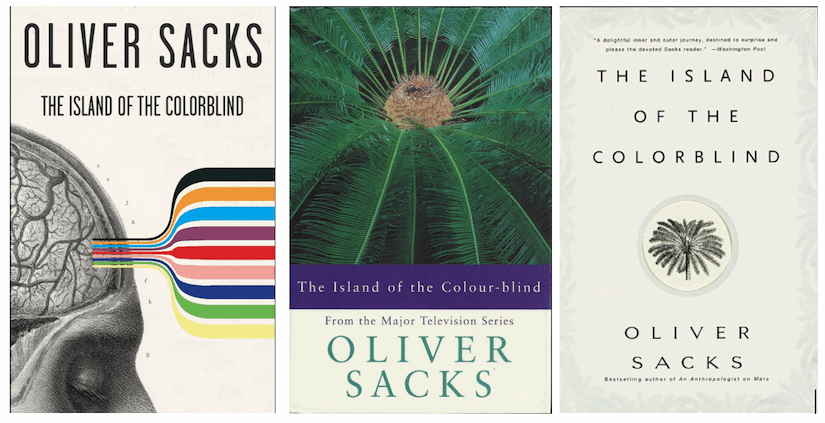
This is the 23rd entry in the Essays Project. We continue on our quest to read the complete Sacks oeuvre. Despite its title, this book is divided into two books: The Island of the Colorblind and Cycad Island.
Retrospective on the Book
This was not one of my favorite books, but it was not without interest. It gave interesting glimpses of life in the South Pacific, particularly the hints of how the US military dominates and suppresses freedom in this area of the world. Seems like a remnant of some of the worst of the colonial days. With respect to Sacks’ visits to various islands, the offer interesting accounts, though I have to say it seems to me that he learned little on his visits that he had not already learned from the informants who accompanied him or who he met there.
For me, the high point of the book was the last chapter about his visit to the island of Rota, a little-visited island near Guam. This visit, unlike the others, had no neurological goal: it was simply to see ferns, cycads and the other primitive plants that are dear to Sacks. I like this chapter because it provides some suggestive passages that offer insight on his love of ferns and the allies, which will come to the fore in his Oaxaca Journal. To wit:
The sense of deep time brings a deep peace with it, a detachment from the timescale, the urgencies, of daily life. Seeing these volcanic islands and coral atolls, and wandering, above all, through this cycad forest on Rota, has given me an intimate feeling of the antiquity of the earth, and the slow, continuous processes by which different forms of life evolve and come into being. Standing here in the jungle, I feel part of a larger, calmer identity; I feel a profound sense of being at home, a sort of companionship with the earth.
ibid., 198
Preface
Sacks wrote this book in one swoop, in July of 1995. Subsequently he added voluminous notes, which his editors paired back; this edition appears to have notes that the original one did not.
Sacks writes that his visits to the islands described herein were brief and unexpected, part of no agenda or research program. It does seem that he is pursuing his theme of how individuals (and, in this case, communities) adapt to rare neurological conditions: hereditary colorblindness in the first case, and a fatal neurodegenerative disorder in the second. It also sounds as if his other biological and botanical interests will play into the books.
Well-crafted Passages
“Again, the Pacific, now at night, a vast lightless swell, occasionally illuminated, narrowly, by the moon. The island of Pohnpei two was in darkness, that we got a saint sense, perhaps a silhouette, of its mountains against the night sky.
— ibid., 26
“Little black-and-white piglets darted across out path — unshy, but unaffectionate, unpetlike too, leading their own seeming autonomous existence, as if the island were equally there’s. We were struck by the fact that the pigs were black and white and wondered, half seriously, if they had been specially bred for, or by, an achromatic population.”
— ibid., 31
The sand itself, broader with the tide’s retreat, was still wet with the phosphorescent sea, and now, as we walked upon it, our footsteps left a luminous spoor.
— ibid., 57
Book 1: Island of the Colorblind
Island Hopping
- Achromopsia — total colorblindness – is rare: one in 40- to 50-thousand. It is not just colorblindness, but also involves painful sensitivity to light, poor visual acuity, and nystagmus (jerky movements of the eyes), the latter two due to lack of a functional cones and thus lack of a fovea.
- Experience of. Sacks wonders how the world is experienced by those who have congenital achromopsia — Do they feel they are missing anything? Do they have compensatory hyper developed senses like touch, or the ability to see texture and pattern?
- Two Islands. Sacks learns about two islands with large populations of people with congenital achromopsia: Fuurm an island off Norway, and Pingelap, in Caroline Island archipelago. It turns out that those on Fuur have died or migrated, but having made contact with Knut, an achromopsic Norwegian who specializes in achromopsia, he invites him — never having met him in person — to accompany him to Pingelap, in Micronesia. Likewise, he invites Bob Wasserman, an opthmalogist and longtime collaborator, to come as well.
Pingelap
- Pingelap is one of eight tiny atolls scattered around the island Pohnpei. It was devastated by a typhoon in 1775 that killed 90% of the inhabitants. Around that time a mutation that led to achromopsia appeared in the ruling class family, and subsequent inbreeding among the reduced population led to the emergence of achromopsia among 8% of the inhabitants (and about 1/3 carry the (recessive) gene.
- The visual disadvantages of achromopsia lead to social disadvantages: those affected can not work outdoors during the day due to the bright sunlight. This is an economic limitation, and a social one since achromotopes are less preferred for marriage because of the possibility that children may inherit the condition. Those with achromopsia also are less likely to learn to read, or read well, because of poor acuity and nystagmus.
Pros and Cons of Chromatopsia:
- Seeing better in the jungle (?)
Knut […] saw quite clearly, perhaps more clearly than the rest of us. For us, as color-normals, it was at first just a confusion of greens, whereas to Knut it was a polyphony of brightnesses, tonalities, shapes, and textures, easily identified and distinguished from each other. He mentioned this to James, who said it was the same for him, for all the achromatopes on the island…
— ibid., 3
- The achromotopsic weaver. There is a nice passage where Sacks describes visiting a Weaver who is achromotopsic. In the dimness of her hut, they can see patterns of luminance in her weaving that become invisible when the mat is taken outside into the sunlight. Interesting to reflect on this example of beauty which is not visible to those with ordinary vision. “As we adapted to the darkness, we began to see [the weaver’s] special art of brightnesses, delicate patterns of differing luminances, patterns that all but disappeared as soon as we took one of her mats into the sunlight outside.“
- But do they really do better? Sacks makes the argument that people with achromatopsia can perceive the jungle better than people with normal color vision – because rather than seeing a melding of different shades of green, they can distinguish things by luminance, texture, and tone. I am not convinced. Normally-sighted humans are quite adept at distinguishing different shades of color, especially when they are adjacent, and especially if they are experienced in the environment. Sacks may be trying too hard here, to continue his team that disabilities often come with complementary skills.
Other
- Atolls are formed by coral growing on slopes of submerging volcanos — it was Darwin who proposed this. On eniawotok atoll, the coral goes down 4500 feet before it contacts bedrock, testifying to the immense span of time covered, and the growth of coral upon coral upon coral….
- The rest of this chapter seems much like a travelogue. Sacks has a couple of paragraphs on breadfruit, another paragraph on taro, another on spam. Another couple on night fishing, and so on It’s interesting enough, and well written, but not that rich in neurology.
- The description of the visit to Pingelap was interesting, but it doesn’t seem to me that Sacks learned anything that he did not already know about achromatopsia from talking with Knut.
…reading break…
Pohnpei
- Pohnpei is a large mountainous island centered around a volcano that is about 5 million years old. It is fringed with mangrove swamps and its size and height, provides a refuge for people from the outlying atolls when disaster or overpopulation forces them to emigrate. Interestingly, emigrants from the various atolls often form their own communities, separate from the inhabitants of the main island.
- Nan Madol. On first arriving, they set out for Nan Madol, an ancient deserted megalithic construction on the far side of Pohnpei. Nan Madol is comprised of about 100 interconnected islands that dates back to about 200 BC. It has walls made out of huge hexagonal columns of the salt – some walls are 25 feet in height. They describe what they see, and their guide recounts what little is known of the history.
- Oceanic islands as independent from continents. Charles Derwin and Alfred Russell Wallace were the ones responsible for showing that oceanic islands were not fragments of continents, but rather arose from independent volcanoes growing up from the ocean floor. This was largely due to their observations of the island flora and fauna and how distinct they were from their mainland analogs.
- Kava. Sacks and his colleagues participate in a kava (locally known as sakau) ceremony. The drink the kava, become numb and indolent, and fall into a dreamless sleep. Sacks provides beautiful descriptions of the visual effects that the drug is having on him the next morning.
- The rest of the chapter feels mostly like a travelogue. They do visit the ‘colony’ village populated by emigrants from Pingelap, and talk to a few more achromatopes, but nothing more seems to be learned. But the prose continues: we learn about bats; the making of Sakau; the history of occupation of the island by Spanish, Germans, and Japanese; the native plants and learn which are endemic to the Pohnpei, and so on. Not boing, but not terribly interesting either.
Book 2: Cycad Island
Guam
I didn’t really care for this chapter/essay very much.
It revolves around a visit to Guam and to John Steele, a physician he had a brief exchange with long ago who now had spent a couple of decades working in Guam. Steele is interested in a local endemic disease called lytico-bodig, which resembles either a progressive motor neuron disease resembling ALS (lytico) or a sort of parkinsonsonian paralysis, sometimes with dementia (bodig). Steele (and subsequently Sacks) sees parallels between this disease and the Parkinsonsonian symptoms in Sacks’ Awakening patients.
The chapter describes Sacks’ visit to Guam, and his interviews and examinations with Steele’s L-B patients, interspersed with a couple of snorkeling and cycad-viewing expeditions. Much of the chapter is presented through Steele’s voice, and it seems a bit tedious as the history of attempts to understand the etiology of L-B are recounted. In the end, we are no closer to a solution, nor do I feel we have much more of an understanding of L-B, except that it is an odd disease with, apparently, an exceptionally long incubation period. We do see that here, most patients continue to be cared for by their family and friends as long as is possible, in contrast to the institutionalization that would generally be practiced in the more ‘advanced’ world. Another theme, picked up from the other chapters, is how despotic the US military seems to be in its domination of the islands.
The one glimmer of interest I found was the speculation that perhaps, in analogy to the way islands have a sort of magnifying and distorting effect on evolution due to their isolation and small populations, islands lend themselves to despotic behavior because the people who end up in power exercise a sort of magnified and distorted control due to their isolation and a sort of not-very-big-fish-in-small-pond effect.
…reading break…
Rota
Sacks begins this chapter writing of his childhood fascination with primitive plants, due, in large part, to the book Ancient Plants, by Marilyn Stopes. He describes skipping over the flowering plants, and going straight to the most primitive ones: ginkos, ferns, cycads, lycopods (club mosses), horsetails. When he was evacuated from London, and when to see his Aunt during the breaks in terms, she showed him living horsetails, and told him how in primitive time they had grown to giantic size and formed entire forests. Likewise with ferns and club mosses. He writes; “At night I dreamed of these silent, giant towering horsetails and club mosses, the peaceful swampy landscapes of 350 million years ago, a Paelozoic eden, and I would wake with a sense of exhilaration and loss.” He writes that he believes that his separation from his family [and, privately, I wonder if the abuse he suffered during the term at school] was rsponsible for his fascination with and fixation upon the past. A bit later he writes:
[There] was a peculiar static, pictorial quality in these dreams, with at most a slight wind rustling the trees or rippling the water. They neither evolved nor changed, nothing ever happened in them; they were encapsulated as in amber. Nor was I myself, I think, ever present in these scenes, but gazed on them as one gazes at a diorama. I longed to enter them, to touch the trees, to be part of their world— but they allowed no access, were as shut off as the past.
–ibid., 180
His Aunt also took him to the Museum of Natural History in London, where he loved the dioramas portraying ancient worlds, and felt heartbroken” when he learned that the giant plants no longer existed. These too became dreamscapes for him.
He also visited Kew Gardens where he loved to visit the fern gardens and the Palm House. It was at the latter where he finally saw living cycads, which struck him as the survivors of an earlier age, now odd relics of the past, but also heroic in that they survived the catastrophe that extinguished the dinosaurs and adapted to new conditions.
All of this set the stage for his desire to see cycads, etc., in the wild.
And I yearned to see cycads in their own context, not planted, not labelled, not isolated for viewing, but growing side by side with banyans and screw pines and ferns all about them, the whole harmony and complexity of a full-scale cycad jungle the living reality of my childhood dreamscape.
–ibid., 184
This is what drew him to Rota, the least inhabited island near Guam, with the best preserved ecology. “The jungle was so dense in places that the light could hardly filter through, and I had the sense, at times, of a fairy landscape, with every tree trunk, every branch, wreathed in epiphytic mosses and ferns.“
What follows is a nice description of exploring the cycad forest, in the company of a medicine woman, Beata and her son Tommy. They describe various cycads, other types of primitive plants, and coconut crabs, and discuss various aspects of the natural history of the ecosystem.
What I think is nice about this chapter is that it gives us a sense of the origin of Sacks’ appreciation of primitive plants, and the feeling he gets from them, well expressed here:
The sense of deep time brings a deep peace with it, a detachment from the timescale, the urgencies, of daily life. Seeing these volcanic islands and coral atolls, and wandering, above all, through this cycad forest on Rota, has given me an intimate feeling of the antiquity of the earth, and the slow, continuous processes by which different forms of life evolve and come into being. Standing here in the jungle, I feel part of a larger, calmer identity; I feel a profound sense of being at home, a sort of companionship with the earth.
ibid., 198
This chapter, it seems to me, would form a nice prelude for his book Oaxaca Journal.
# # #
Views: 15