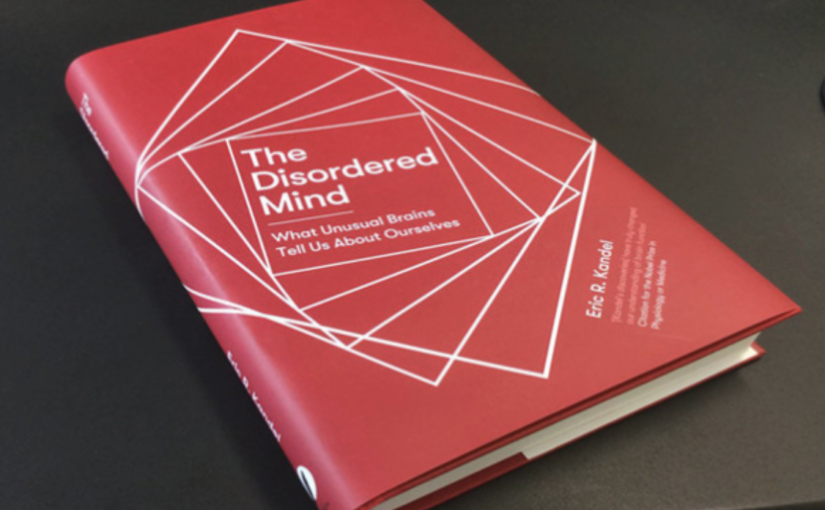
The Disordered Mind: What Unusual Brains Tell us about Ourselves, Eric R. Kandel, 2018.
Kandel is an eminent neuroscientist, known for his work on the low-level mechanisms of learning and memory as demonstrated in Aplysia. He’s won a host of prizes, including the Nobel for this work. Interestingly, as an undergraduate he majored in humanities, and afterwards became a psychiatrist, before migrating into neuroscience. Now in his 90’s, he is writing about larger themes, and addressing himself to more general audiences.
Writing after having read four chapters: The book is interesting, but I wish it went into more detail. Though it is also possible that the detail is not available — i.e. we still not shockingly little about mental disorders.
This is his most recent book in this vein; it is preceded by In Search of Memory: The Emergence of a New Science of Mind (2007); The Age of Insight: The Quest to Understand the Unconscious in Art, Mind, and Brain, from Vienna 1900 to the Present (2012); and Reductionism in Art and Science: Bridging the Two Cultures (2016).
Table of Contents
- What Brain Disorders Can Tell Us About Ourselves
- Our Intensely Social Nature: The Autism Spectrum Emotions
- The Integrity of the Self: Depression and Bipolar Disorder
- The Ability to Think and to Make and Carry Out Decisions: Schizophrenia
- Memory, the Storehouse of the Self: Dementia
- Our Innate Creativity: Brain Disorders and Art
- Movement: Parkinson’s and Huntington’s Diseases
- The Interplay of Conscious and Unconscious Emotion: Anxiety, Post-Traumatic Stress and Faulty Decision Making
- The Pleasure Principle and Freedom of Choice: Addictions
- Sexual Differentiation of the Brain and Gender Identity
- Consciousness: The Great Remaining Mystery of the Brain
- Conclusion: Coming Full Circle
My Thoughts on the Book — TBD
TBD after reading.
Notes on the Text
Introduction
Here he sets the scene, offering an extremely abbrieviated account of the development of the current view of the brain/mind from Darwin (Expression of Emotions in Man and Animals, which suggests that mental processes have evolved in the same way as morphology, etc.), to the emergence of cognitive science and its synthesis of philosophy, psychology and neurophysiology.
He mentions two concepts in the introduction that I hope to come away with a good understanding of. One is “neural circuits,” and I am curious about what these are, how they function, and whether “circuit” is more of a model or a metaphor. The second, at the end of the introduction, he suggests that we now know that consciousness is not unitary:
Modern studies of consciousness and its disorders suggest that consciousness is not a single uniform function of the brain: instead, is different states of mind in different contexts.
This too I would like to understand better.
C1: What Brain Disorders Can Tell Us About Ourselves
A short recap of the history of psychiatry and neurology
- 1790. Phillipe Pinel founds psychiatry, making the claim that mental disorders are medical rather than failures of character. He releases patients in the hospital he runs from chains and introduces humane approaches that treat disorders as a product of life stresses and inherited dispositions.
- Early 20th C: Emil Kraepelin founds modern scientific psychiatry. Unlike Freud, who believed disorders stem from a person’s experience, K believed that all disorders have a biological (and genetic) origin. Kraepelins views were based on the work of Broca (1860) and Wernicke (1875) who showed that the aphasias named after them were associated with damage to particular areas of the brain.
- Differences between neurological and psychiatric disorders.
- Nature of disorder. Neurological disorders tend to produced unusual behavior or fragmented behavior; psychiatric disorders tend to produce exaggerations of everyday behavior.
- Damage: Neurological disorders are often due to gross damage to the brain that is visible in autopsies or structural scans; psychiatric disorders are more difficult to observe: they may involve increased or decreased activity in particular areas of the brain, or alterations in neural circuitry.
- Claim: there are no profound differences between neurological and psychiatric disorders.
… Reading Break …
C2: Our Intensely Social Nature: The Autism Spectrum Emotions and the Integrity of the Self: Depression and Bipolar Disorder
Characteristics of autism ( xx%; genetics: 90%)
- Autism disorders involve difficulty in socially connecting – verbally or non-verbally – with others.
- One way to think of autism is in terms of the theory of mind. Normally, we attribute mental states — beliefs, intentions, opinions — to others, and those attributions assist us in predicting their behavior (or how they might be in response to particular incidents, events or circumstances). The ability to make such predictions accurately is crucial to prospering in a social group.
- Autistic children do not appear to behave in this way, according to both behavioral experiments and brain imaging studies.
- The superior temporal sulcus, an area of the brain that responds more strongly to ‘biological motion’ (e.g., a person walking) does not show enhanced activity when autistic children are shown such motion. Thus autistic people have difficult reading biological motion, which makes inferring intention more difficult.
- Autistic people also have difficulty reading faces. Eye scanning studies show that they tend to focus on the mouth, rather than the eyes (as non-autists do).
[Leslie Brothers] argued that social interaction requires a network of interconnected brain regions that process social information and together give rise to a theory of mind; she coined the term social brain to describe this network. The regions include the inferior temporal cortex (involved in face recognition), the amygdala (emotion), the superior temporal sulcus (biological motion) the mirror neuron system (empathy), and the areas in the temporal parietal junction involved in theory of mind’
ibid., p. 35
- People with autism lack coordinated or synchronized activity among these areas of the brain. Some of these brain areas — the frontal lobe and amygdala – may develop out of sequence, which can disturb patterns of growth in other areas of the brain.
- Autistic children often fail to exhibit certain infant behaviors including babbling, eye contact, social behaviors like nodding yes or waving bye-bye, and may interact with toys in unusual ways (arranging by color, rather than acting out events or situations). Most autistic children show some improvement as they age.
- An autistic person says: “Autism makes my life loud. … Everything is amplified. … A bright light feels brighter. A soft buzzing from a light feels thunderous. Instead of happy I feel overwhelmed. Instead of sad I feel overwhelmed. … Autism makes my life stressful.“
Causes of autism
- Autism as a genetic disorder: if one identical twin has autism, the odds are 90% that the other will as well. That is a higher correlation than for any other developmental disorder.
- Genetics: Geneticists have recently discovered two new types of genetic mutations: de novo mutations (which are not inherited from parents, but rather occur during replication), and copy number variations which involve sequences and alter the structure of chromosomes.
- Copy number variations involve either deletion or duplication, and can increase or decrease the number of genes in a chromosome by up to 30. There is a region in gene 7 where, if it is lost, autism can result, and if it is duplicated, Williams syndrome (hyper social behavior) can be the result.
- De novo mutations have been shown to increase with the age of father (since sperm cells continue to divide through the lifespan, whereas a mother is born with all her eggs). De novo mutations play a role in autism, and also in schizophrenia and bipolar disorders.
- Synaptic Prunning. Autistic brains have two many synapses; Schizophrenic brains have too few.
- Hormones. Oxytocin appears related to bonding between mothers and offspring; likewise vasopressin also appears to contribute to paternal behavior and pair bonding.
… Reading Break …
C3: The Integrity of the Self: Depression and Bipolar Disorder
- Emotion — ephemeral;
- Mood, an emotion that extends in time – longer lasting;
- Temperament — tendency or inclination to a mood.
- Prefrontal Cortex <=> Amygdala <=> Hypothalmus
- Prefrontal Cortex: executive function & self-esteem and regulates effect of emotion on thought and memory
- Amygdala: coordinates emotion
- Hypothalmus: bodily functions such as heart rate, blood pressure, sleep cycles, etc.
- Note on above: Functions of prefrontal cortex and amygdala seem vague… –“coordinates” emotions? what does that mean?
- Charles Darwin: Emotions are part of a pre-verbal system of social communication
- The text speaks of emotions and feelings — how do they differ?
- Emil Kraepelin — the founder of psychiatry — distinguished between disorders of mood (now bipolar), which also are episodic, and disorders of thought (now schizophrenia), which tend to be long-running and grow worse with time
Depression (5%; genetics: ?%)
- Andrew Solomon — a self-phenomenology of depression. Tired, overwhelmed by everyday tasks, lack of pleasure; withdrawal. Then anxiety — manifests as intense, crippling, non-specific fear… what you feel when falling, but it persists.
- Both depression and stress appear to activate the body’s hypothalmic-pituitary-adrenal axis causing the adrenal gland to produce cortisol, the body’s primary stress hormone. Over time depression appears to reduce connections between the pre-frontal cortex and the hippocampus (memory). This leads to flattening of emotion and impaired memory and concentration.
- Brain imaging can distinguish between patients who can helped by psychiatry and those who need both psychiatry and medication.
- Two types of neurotransmitters: modulatory (‘tune’ whole circuits — dopamine and serotonin), and mediating (act on directly on the cell — GABA[-] and glutamate[+])
- Two components of the neural circuit of depression are Area 25, subcallosal cingulate nucleus (thought, motor control and motivation) and the right anterior insula (self-awareness and social experience). The right anterior insula connects to the hypothalmus, hippocampus, and prefrontal cortex.
- The anterior cingulate gyrus also functions abnormally in people with depression.
- Initially depression was treated with SSRIs (selective serrotonin reuptake inhibitors) like prozac, leading to the theory that insufficient serotonin was responsible for depression. But boosting serotonin didn’t help all patients get better, and typically takes about two weeks to affect patients it does help.
- Later Ketamine, which prevents glutamate from binding to cells, was found to immediately alleviate depression (although it has side effects which prevents it from being a long term solution).
- Almost all anti-depressants stimulate the growth of cells in the prefrontal cortex and the hippocampus.
- Aron Beck developed cognitive behavioral therapy in the 1970s which has been shown to work as well or better for mild and medium depression as anti depression medications.
- Psychotherapy produces visible, lasting changes in brain activity.
- ECT and deep-brain stimulation can also be effective
Bipolar (1%; genetics: 70%)
- About 25% of people with depression go on to experience a manic episode.
- Once a first manic episode occurs, the brain is changed in ways that make subsequent episodes more likely to occur with very minor stimuli.
- Lithium ameliorates mania by passing through sodium channels but it is not pumped out like sodium — so it generally lowers neural sensitivity to internal and external stimuli. But not everyone responds to Lithium, and it has unpleasant side effects.
- If one identical twin has bipolar, the chance of the other having it is 70%
- It seems like little is known about neural circuits on transmitters. They found one gene associated with bipolarity which is related to the facilitation of neural signaling…
C4: The Ability to Think and to Make and Carry Out Decisions: Schizophrenia (1%; genetics: 50%)
- Schizophrenia is a neurodevelopmental disorder; it appears to have its origins early in life, but only manifests in adolescence or early adulthood, perhaps as a result of overactive synaptic pruning. It is due to anatomical defects in neural circuits, and therefore can not be reversed. It is progressive and over time a reduction in gray matter is observed.
- Symptoms: Visual or auditory hallucinations; delusions of persecution, control, or grandeur. Also social withdrawal and loss of motivation. Cognitive symptoms include impaired working memory, executive function, and volition.
- Eugen Bleuler defined schizophrenia as a disassociation of feelings from cognition and emotion.
- Antipsychotic drugs can allieviate positive symptoms for about 80% of patients; but they have unpleasant side effects — many produce Parkinson-like symptoms. Psychotherapy can also help, by assisting schizophrenics in recognizing they have a disorder.
- Mesolimbic and nigrostriatal (dopaminergic) pathways are implicated in schizophrenia.There are five types of dopamine receptors, and different drugs have different effects on the various typ4es of receptors. Drugs that effect the receptors that dominate the nigrostriatal pathway tend to have Parkinsonian-like side effects…
- If oncoming (prodomal phase) schizophrenia can be identified, cognitive psychotherapy can be helpful as early intervention.
- A three year old’s brain has twice as many synapses as an adults; pruning begins at about puberty.
… Reading Break …
C5: Memory, the Storehouse of the Self: Dementia
- A short history of memory
- 1910: Pavlov trains dogs to salivate in response to a bell, demonstrating associative memory / conditioning.
- 1930’s: Wilder Penfield discovers that some memories are localized when he stimulates the neurons of epileptics prior to surgery
- 19xx: Barbara Milner discovers that HM, who cannot form long term memories due to a brain injury, *can* form them for motor tasks — this suggests there are different memory systems for different types of memory.
- 19xx: Larry Squire distinguished between declarative memory and implicit (motor/perceptual skills) memory.
- 1965-1983: Erik Kandel and colleagues demonstrate
(1) classical conditioning for the gill-withdrawal reflex in Aplysia (1983)
(2) simple behavior could be modified by learning and that changes took place in the synaptic connections.
(3) the molecular mechanisms underlying memory formation, including the role of cyclic AMP, protein kinase A, and CREB in converting short-term to long-term memory through new protein synthesis and synaptic growth.
- 1965-1983: Erik Kandel and colleagues demonstrate
- 19xx: Larry Squire distinguished between declarative memory and implicit (motor/perceptual skills) memory.
- 19xx: Barbara Milner discovers that HM, who cannot form long term memories due to a brain injury, *can* form them for motor tasks — this suggests there are different memory systems for different types of memory.
- 1930’s: Wilder Penfield discovers that some memories are localized when he stimulates the neurons of epileptics prior to surgery
- 1910: Pavlov trains dogs to salivate in response to a bell, demonstrating associative memory / conditioning.
- Both explicit (declarative) and implicit memory can be stored for the short term (seconds to minutes) and the long term (days and longer). The former is due to changes in existing synaptic connections, the latter is due to to growth of new synapses.
Key insights about memory
- Memory has anatomical specificity – Different types of memory depend on different brain circuits
- Memory is not unitary – There are multiple, distinct memory systems that can be dissociated by brain damage
- Memory formation involves synaptic plasticity – Learning changes the strength and structure of connections between neurons
- Time-dependent memory processes exist – The mechanisms underlying short-term and long-term memory are fundamentally different
Memory and Aging; and disease
- Age-related Memory Loss. Some memory loss beginning around age 40 is normal. Explicit memory is more subject to loss; implicit memory is robust with aging
- Osteocalcin and bone strength. The hormones osteocalcin, produced in bone marrow can reverse age-related memory loss in mice and improve learning evening young mice. It appears that strength training — which builds bone mass — may be helpful in reducing or eliminating memory loss in humans.
- Alzheimer’s occurs in many people who have no family histories of it. There is some indication that genetics pre-disposes people to early onset Alzheimer’s. The gene APOE4 is the most significant risk factor for people developing late onset Alzheimer’s: about half the people who have Alzheimer’s have that gene; developing type 2 diabetes is also a risk factor. The mechanism appears to be the formation of amalyoid plaques (outside the neurons) and neurofibrillary tangles (inside the neuron). APOE4
- APOE4 (high risk): Present in 15-25% of people, this variant significantly increases risk. Having one copy (E3/E4) increases risk 2-3 times, while having two copies (E4/E4) can increase risk 8-25 times higher than APOE3 carriers. In 2022, Stanford researchers discovered rare mutations (R251G and V236E) that can protect against Alzheimer’s even in people carrying APOE4, reducing risk by about 60%.
- FTL Dementia. Once thought to be rare, it is not so rare. It is the leading cause of dementia in people under 65; currently 45-65,000 people in the USA have it. There is a possible treatment involving the administration of prograndulin which has the possibility of curing it.
C6: Our Innate Creativity: Brain Disorders and Art
I didn’t find this chapter very interesting. A couple of notable points:
- The artist, Chuck Close, was face blind (prosonogaphasia) and created portraits to try to ‘see’ his friends. Later he developed FTL dementia, and his work changed, become more colorful
- People with left hemisphere damage may become more creative; it is thought that the left hemisphere can inhibit the right to a degree.
- Dada and surrealism were influenced by pictures drawn by schizophrenics (collected by several heads of the Heidelberg Clinic) and by Freud’s emphasis on the role of the unconscious and dreams.
… Reading Break …
C7: Movement: Parkinson’s and Huntington’s Diseases
- Our body has ~650 muscles, and the spinal chord uses motor neurons to send signals to one or more of each; furtherore, the brain needs feedback and this happens via sensory feedback neurons. The latter is proprioception and creates our internal sense of our body and its position in space.
- Motor neurons send both excitatory and inhibatory signals: for movement to occur some muscles must be stimulated to contract, and other complementary muscles must relax.
- Charles Sherrington received the 1932 Nobel Prize for his studies of motor and sensory feedback neurons, along with Edgar Adrian who discovered action potentials.
- Parkinson‘s disease is characterized by a tremor at rest, abnormal posture, and bradykinesia (slowness or limited movement) and is now known to be caused by the destruction of neurons in the Substantia Nigra of the brain – the neurons have clumps of mis-folded protein inside them (now called Lewey bodies).
- Treating Parkinson’s. L-Dopa, which initially seemed like a promising treatment, works at first but then produces dyskinesia once the cells in the substantia nigra have died. [See Awakenings, by Oliver Sacks.] Another approach is surgical destruction of the subthalmic nucleus on one side of the brain; that has now been replaced by deep brain stimulation of the subthalmic nucleus.
- Huntington‘s disease is characterized by both cognitive and motor disorders, including sleep disorders and dementia; it typically appears at about age 40. It is hereditary and is caused by a CAG expansion in the Huntington gene that results in the production of proteins with repeated glutamine amino acids that result in mis-folding.
- Protein mis-folding is responsible for many neurological diseases: Alzheimer’s, FTL dementia, Parkinson’s, Huntington’s, Cruetzfeldt-Jakob’s disease, and chronic traumatic encephalopathy.
- Prions. Stanley Prusiner discovered that Cruetzfeldt-Jakob’s disease is caused by prions, misfolded proteins which can replicate without genes.
- Molecular Chaperone Pathways assist proteins in folding correctly. Experimental work shows that giving fruitflies which genetic disorders extra chaperone proteins can protect them against movement disorders. These studies offer possibilities for new types of treaments…
C8: The Interplay of Conscious and Unconscious Emotion: Anxiety, Post-Traumatic Stress and Faulty Decision Making
Not very interested in this chapter.
- Emotions have a fast unconscious component that produces physiological changes in the body, and a slower component that results in the subject becoming conscious of them.
- Early trauma can lead to epigenetic changes that predisposes sufferers to PTSD later in life.
- If exposed to a particular traumatic event, only 4 / 10% (men / women) would develop PTSD.
- Emotions make decision making easier.
… Reading Break, resume 6/30 …
C9: The Pleasure Principle and Freedom of Choice: Addictions
- An early claim in the chapter is that repeated abuse of substances that induce pleasure via dopamine release erodes “the brain’s ability to control desires and emotions,” and that this is the root of addiction. I wonder if that chapter will really show that there is a physiological basis for this claim. If so, why is it not the case that all behaviors that are pleasurable become “addictive?”
- Our brains contain relatively few dopamine producing neurons — these are mostly in the substantial nigra and the ventral tegmental area — but these neurons project to various areas of the brain such as the amygdala, hippocampus and prefrontal cortex.
- Olds and Milner, two neuroscientists, inserted electrodes in the brain’s of rats that just happened to stimulate the dopaminergic system, provided a lever that would turn on the current, and observed that the rats soon lost interest in food, water and other stimuli and would press the lever until they died.
- Dopamine is typically released in expectation of a reward — thus organisms can be conditioned to release dopamine in response to many types of stimuli.
- Cocaine is particularly addictive because it interferes with the re-uptake of dopamine.
- The text argues that one thing that makes addiction hard to overcome is that the pleasure becomes associated with the entire context of drug taking. It cites a study that showed Vietnam Vets addicted to heroine could kick the habit when they returned to the US because they did not encounter the context in which they used the drug.
- Studies of activation in the brain show that (1) the addicts brains show very little additional activity when they take their drug, and (2) that changes triggered by the drug effect circuits involved in motivation and reward. [I’d like a lot more detail here.]
- The heritability of drug addiction is roughly 50%; higher the Type II Diabetes or Hypertension.
- Social Network Contagion. When a person becomes obese, the probability that a friend will become obese increases by 171%. Similarly, the probability of tobacco use by friends of a new smoker increases by 36%. I wonder whether there is something special about obesity, or if that sharing meals is such a strong component of social activity.
- Statements of the form “encountering contextual cues for a drug can trigger the urge to use the drug. I don’t understand what this nets out to physiologically.
… Reading Break …
C10: Sexual Differentiation of the Brain and Gender Identity
- Three factors: Gender identity (am i a boy or girl or somewhere in between); anatomical gender; sexual orientation.
- Sexual identity: anatomical (external); gonadal; chromosomal. Some single-gene mutations can cause anatomical sex to become disassociated from gonadal and chromosomal sex.
- By the eighth week of gestation the testes of a male release almost as much testosterone as those of a pubescent boy or adult man.
- In every animal, organisms engage in gender-specific sexual and social behaviors; there are also sexual dimorphisms — molecular and structural differences in the brain.
- Neural circuits that control gender-specific behavior of each sex are present in both sexes (in mice). Furthermore, gender-specific behavior (e.g. paternal behavior in mice) can switch on and off.
- Ben Barres — a transgender neuroscientist — gives an account of his experience in (in part) a book called The Riddle of Gender, by Deborah Rudacille.
- By the time they reach puberty, 75% of children who have questioned their gender identity will go on to identify with their gender at birth.
C11: Consciousness: The Great Remaining Mystery of the Brain Conclusion: Coming Full Circle
- Most people who have studied consciousness, or examined disorders of consciousness, think of it “not as a unitary state of mind but rather of different states in different contexts.” (p 219)
- We cannot understand consciousness without understand the complex unconscious processes that underly our perception of the world.
- Consciousness can be thought of as having two components: Degree of activation or arousal, and content of processing in the aroused state.
- Thus, for the first, we move from sleep, to drowsiness, to normal awareness, to various states of focused awareness (e.g. when fearful, excited, ecstatic, and so on). This is the function of the reticular activating system, which extends from the brainstem and midbrain to the thalamus and the cortex.
- The second has three characteristics: qualitative experience (listening to music is different from smelling a lemon); subjectivity (I know only my consciousness, though I expect yours is similar (intersubjectivity)); and unity of experience (my experience seems holistic — thus I am not aware of my visual blind spot, nor of any scotoma I may have that are induced by neurological trauma).
- Personally, it seems to me that the degree of focus, or attention, deserves a place in this characterization. One can be focused on particular content, follow a sort of narrative arc, or just freely drift from one thing to another, as in hynagogia.
- And then also, it seems to me, that yet another aspect has to do with the body-image-like representations that form the underpinnings of much of our routine and even instinctive activity. It seems to me that this sort of image-based representation may extend farther than just the body image, to the models of the space around us and perhaps even include behavioral schemata.
- Preconscious aspects of perception (e.g. perceptual gestalts), cognition (word production), and behavior (riding a bicycle).
Conscious perception also begins with activity in the visual cortex, but instead of dying out, the activity is amplified. After about 300 milli-seconds, it becomes very large: it’s like a tsunami instead of a dying wave. It propagates higher into the brain, up to the prefrontal cortex. From there it goes back to where it started, creating a reverberating neural circuit of activity. This is the broadcasting of information that occurs when we are conscious of that information. It moves information into the global workspace, where it is accessible to other regions of the brain.
[…]Conscious activity is restricted in what it can focus on: it selects on a single item at a time and broadcasts it widely across the brain. Unconscious processing can take place in many regions of the cortex simultaneously, but that information is not broadcast to other areas of the brain.
—ibid 229-230 & 331.
- Kahneman: System 1 and System 2 thinking. Hot thinking and cold thinking. Joseph LeDux has found that information can take one of two routes to the amygdala: one fast and direct, the other slower, through several relays in the cortex.
- Wimmer and Shohamy showed that images paired with monetary rewards are preferred (according to neurophysicological signals) to those not paired, even though subjects cannot consciously remember the pairings.
- Psychoanalysis made great strides in the first half of the 20th century, but foundered in the second half. Three factors played a role
- It exhausted its investigative power, both because there is a limit to what can be learned by talking with people, and because such conversations are private and can not be shared as scientific data
- It has rarely used the scientific method, and its theories and conclusions have not been subjected to experimental verification
- Psychoanalysts have, by and large, not engaged with what is understood about the biology of the brain and the neurophysiological correlates of the brain.
# # #
Views: 43