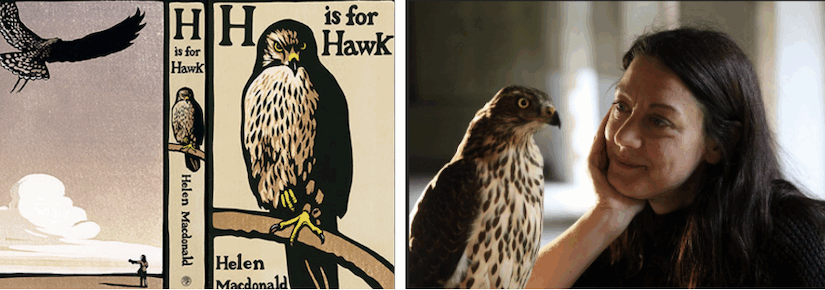
H is for Hawk, Helen Macdonald

October 2025

About the book

I read Macdonald’s Vesper Flights early this year when we were in Hawaii. Flights is a book of essays mostly about natural history and mostly about birds – though, true to the original meaning of essay, “about” covers a lot of ground. The writing was beautiful, and I not only read the book but studied it to improve my own writing. I’d expected much the same from Hawk. 

But Hawk is a very different book. To be sure, the writing is beautiful, and it will repay study, but it is a single-track narrative rather than a series of essays. Hawk traces out two central narratives: one is an account of her training a goshawk and her experiences training, living and hunting with it; intertwined with this narrative is an account of coming to terms with her father’s death, and the period of isolation, depression, and gradual recovery that ensured. Though as I write this, I note that the ‘coming-to-terms’ narrative is really itself a braid that includes childhood memories and an account of the life of T. H. White. Hawk was published in 2014 – I believe it to be her first book, possibly excepting poetry.

I am not going to provide a chapter by chapter account. Rather, my aim here, is just to record the phrases and passages that struck me. 

Continue reading H is for Hawk, Helen Macdonald

Views: 28

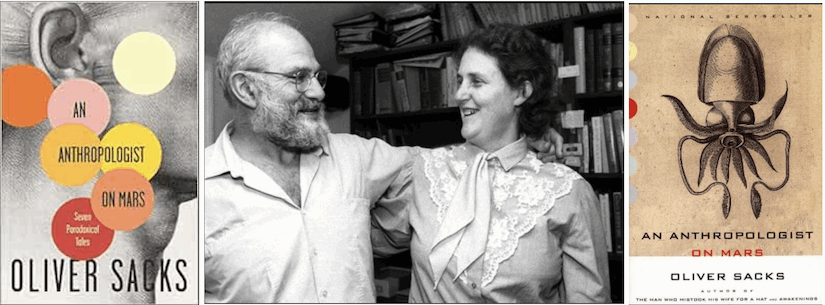
EP#22: An Anthropologist on Mars, Oliver Sacks

This book seems to focus on people with either acquired or inborn neurodivergences who have adapted to their situations and live, in a sense, in very different worlds from ours.

After reading: yes, this supposition is correct Most are leading successful, if different lives, except for ‘the last hippy’ of chapter 2.

Continue reading EP#22: An Anthropologist on Mars, Oliver Sacks

Views: 60

The Saint of Bright Doors, Vajra Chandrasekara

The Saint of Bright Doors, Vajra Chandrasekara, 2023

This is an acclaimed science fiction book that has gathered both critical and popular praise. I read it a couple of years ago — I try to read the ‘best of the year’ books in SF – and it didn’t engage me, although I did manage to finish it. I am now reading it a second time, as part of a Science Fiction and Fantasy course I’m taking at the U, and am going to try harder to appreciate it; or at least to understand what others appreciate in it. And perhaps also reflect on aspects of it that prevent me from appreciating it.

At this point I’ve just started the re-read it. I am noticing some very nice turns of phrase. I also notice that the protagonist begins as, in a sense, an abused child who is being trained to do terrible things by a mother who sees him only as a tool. I’m not really noticing much in the way of love or affection or humor among any of the characters.

Continue reading The Saint of Bright Doors, Vajra Chandrasekara

Views: 28

SF&F Notes (ENGL 3022, Fall ’25, U MN)

Taught by Prof. Sadia Khatri

This is an entirely-online asynchronous course. I am not quite sure what level of notes I’ll keep here yet. For starters, here is the course description.

By depicting invented worlds that differ in some way from the real world, fantastika pushes us to interrogate our present lives, politics, and social structures. […] Through diverse literary texts, and some films, we will explore imagined and extraordinary terrains, characters, cultures, ecologies, genders, languages, races, histories, and technologies. We will ask, what does the unreal reveal about our real lives? 

Resources

  • Google Doc Syllabus is HERE
  • Google Drive Readings Folder is HERE

Required Texts

  • Vajra Chandrasekera, The Saint of Bright Doors ~400 pages
  • Miéville, China. The City & The City ~336 pages
  • Okorafor, Nnedi. Binti ~96 pages
  • Le Guin, Ursula. Left Hand of Darkness ~300 pages
    Mondal, Mimi. His Footsteps, Through Darkness and Light ~27 pages
Continue reading SF&F Notes (ENGL 3022, Fall ’25, U MN)

Views: 24

I Contain Multitudes, Ed Yong

Fall 2025

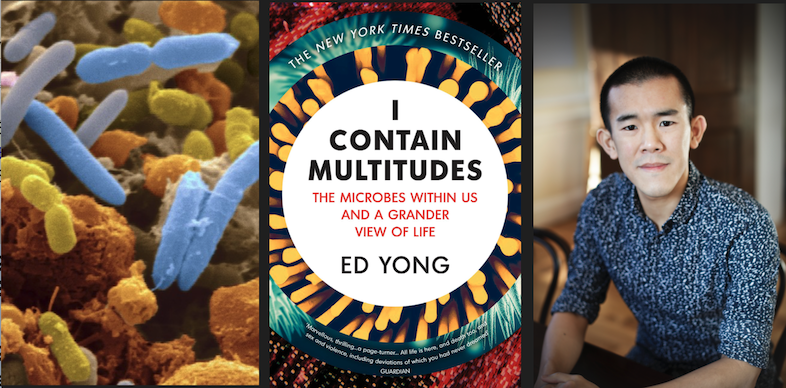
I Contain Multitudes: The Microbes within Us and a Grander View of Life, Ed Yong, 2016.

I am late to this book. I’ve had it for years, and, lately, have kept moving it deeper into the to-be-read stack in the belief that something newer — in what is obviously a rapidly evolving field — will appear. But nothing had as yet, my curiosity is unabated, and my friend Rachel wanted to read it as well, so here we go.

In Summary

I very much enjoyed this book. Fascinating material, and although it is about 10 years old now (a long time in the world of science), I felt like I was getting a very up-to-date picture. Certainly, I’m not aware of any more recent book for the general science-loving reader on this topic.

I will note that I liked it significantly more the Immense World, though I enjoyed and recommend that as well. I think the difficulty with writing this kind of book is how to organize it coherently. Sometimes one can take a temporal path through an area, if there is a strong theme or through-line (as in The Tangled Tree, Quamann or The Master Builder, Arias), but I don’t see that as possible here, where the topic is incredibly broad: microbes, individually and in community, and their interaction with other organisms. I thought Yong did as well as possible (and it is where I feel Immense World fell a little short).

Detailed chapter-by-chapter notes follow, but at a high level this is the arc of the book.  
The first chapter establishes core concepts: microbiomes as ecosystems, and their variation across body sites and individuals. The second chapter provides a capsule microbiology. 
       Next the book turns to ways in which microbes shape the development of their hosts, and the ways hosts, in turn manage their microbiome. In typical Yongian fashion, this is done through a series of example organisms that range from the Hawaiian Bobtail squid (with its light organs manned by microbes that it encases in its body), to the important role of mucus in more complex organisms) in keeping microbes in their proper places. 
       The book then pivots to a discussion of dysbiosis, a situation in which the entire microbial ecology changes in a way that is problematic for its hosts – the leading example here are the microbiomes of coral reefs. It’s a fascinating example. This segues into a discussion of the function of microbiomes (rather than individual microbes) and their diversity (or poverty) over time, and their distribution through populations. 
      After this, I feel like I lose the thread of the book. The subsequent chapters take up interesting topics, but is seems to me more like, having laid the foundations and established the basics of the phenomenon, it turns to special topics. This is still very much worth reading, but except at ending up at possible real-world applications, I feel like that narrative arc falters. 

The Book

Prologue: A Trip to the Zoo

A very ‘soft’ beginning, describing a researcher sampling a pangolin for its skin microbiome. We’ve got a cute animal, comments from a scientist, and an introduction to the basic idea that all living things host ecosystems of microbes that play a variety of surprising roles.

C1: Living Islands

Chapter 1 begins laying the groundwork, sketching out the evolutionary history of life — emphasizing the microbes have been around far longer than any life form — and laying out the basic forms of life: archae, prokaryotes, and eukaryotes.

  • Human vs. Microbiome Cell/Genes. There are roughly as many microbial cells in the human body as human cells, although this is still somewhat speculative. The human genome consists of 20 – 25 thousand genes; the human microbiome has 500x as many.
  • There’s a recap of Alfred Russel Wallace’s voyage, and his claim that: “Every species has come into existence coincident in space and time with a pre-existing closely allied species.
  • No core human microbiome. Scientists initially hoped to identify a core microbiome that was the same from human to human, but that has not held up. At most, there may be said to be a core of functionality that the human microbiome consists of.
  • Variation in the Human Microbiome. The human microbiome varies more between body parts than between humans. The human microbiome also varies in time, from birth to death. The books suggests it follows stages of succession, but all the text says here is that it takes a baby’s microbiome about three years to become an adult one.
  • Given that microbiomes provide essential functionality to animals, etc., what does it mean to be an individual.

Looking ahead to some themes that will be pursued in later chapters:

  • Many conditions from disease (diabetes, colon cancer) to other maladies (autism, obesity) appear to be correlated with the makeup of the microbiome, though of course causality is not clear.
  • Organisms that exhibit convergent evolution in their behavior (e.g., ant-eating animals) also exhibit converence in their microbiomes.
  • Perhaps health problems may be re-envisioned as ecological problems at the microbial level.
  • In some cases microbial genes can permanently inflitrate the genome of their host organism.

…reading break…

C2: The People Who Thought to Look

A brief history of microbiology. Microscopy, microbes, et al.

C3: Body Builders
[microbial modulation of hosts’ development]

  • Hawaiian Bobtail squid have two chambers on their undersides that produce luminescence that protects them by eliminating their silhouette at night when seen from below. The luminescence is produced by bacteria — V. Fischeri — that colonize the chambers shortly after birth.
  • Development of the squid’s luminescence organ is induced by bacteria. The Bobtail squid chambers are covered with mucus and cilia. When a V. Fischeri first makes contact, nothing happens, but when five or more make contact that triggers the expression of genes that produce a cocktail of anti-microbial substances that kill of everything but V. Fischeri . Other enzymes break down the mucus and produced substances that attract even more V. Fischeri . Eventually the V. Fischeri migrate down pores to spaces lined with pillar like cells that envelope the V. Fischeri , and the luminescent ‘organ’ reaches its mature form. What is interesting here is that the development of the squid occurs in a dialog of genetic expression with V. Fischeri
  • MAMPs – Microbial-associated Molecular Patterns. Not sure why the term “patterns” is used. But in general it applies to substances released by microbes that impact, for good or for ill, a host organism. It is now clear that many organisms develop under the influence of microbial partners, often using the same molecules that the squid’s V. Fischeri produces.
  • Germ-free organisms. Organisms that are isolated and raised in a completely sterile environment are often only marginally viable and require artificial substitutes for what microbes would produce.
  • Microbial triggered gene expression. We can see that microbes often trigger gene expression (e.g., in the gut) that leads to the creation of blood vessels, and structures that aid the intake of nutrition and maturation of cells.
  • Choanoflagellates (choans) — S. rosetta. These are water-dwelling eukaryotes that prey on bacteria; Choans are the closest living relatives of all animals. Under certain conditions Choans can aggregate into colonies of about 20 organisms, growing a connecting sheath the binds the separate organisms into a sphere; it turns out that the colonial form is more effective at catching food. The formation of colonies turns out to be triggered by a bacterium, which causes the choan to release a molecule that triggers the formation of the colony.
  • Squggly worms — H. elegans and P-luteo. H. elegans begin as larva; they only attach to a surface and mature when they encounter a biofilm, and this in turn is induced by a particular bacterium referred to as P-luteo. The ocean is swarming with larval animals that only mature when they encounter bacteria, often P-luteo.
  • The ubiquity of bacteria. A repeating theme here is that it’s not surprising that more complex organisms rely on bacteria — bacteria were ubiquitous when the complex organisms evolved, and it makes as much sense to make use of them as any other feature of the environment.
  • Bacteria and the immune system. Bacteria play a crucial role in tuning the immune system. Microbes both influence the production of inflammation producing cells as well as anti-inflammatory cells.
  • Spotted hyenas and bacteria-mediated scents.
  • Microbes and behavior. Changing a mouse’s microbiome can change its behavior. It can make them more or less anxious, and more or less depressed. There is speculation that this may be true for humans as well, and interest in developing “psychobiotics.”

…reading break…

C4: Terms and Conditions Apply
[Mucus, Mile, and the Immune System: Managing the microbiome]

  • Wolbachia reproduces by inserting itself in its host’s female eggs. Over time it has developed many methods of increasing the female/male ratio. This is probably the most successful bacterium outside of the ocean.
  • Prochlorococcus — so numerous that 1 ml of seawater contains 105 bacteria. Produces about 20% of O2
  • “Certain bacteria can even turn their owners into magnets for malarial mosquitoes, whilst others put off the little bloodsuckers. Ever wonder why two people can walk through a midge-filled forest and one emerge with dozens of welts while the other just has a smile? Your microbes are part of the answer.”
  • Symbiosis doesn’t mean “mutually beneficial.” Symbiosis means organisms that live together; but this doesn’t mean that they are necessarily mutually beneficial. It can be largely good, largely bad, a tradeoff, and, most importantly, the cost/benefit ratio and degree of symmetry can very over time.
    • Interesting example: Acacia trees prevent their ants from using other types of sugar. 
  • SIRS — Systemic Inflammatory Immune Rsponse. Sepsis occurs when our ordinarily beneficial bacteria get into the wrong places. 
  • Bacteriocytes Insects have special ‘containers’ for housing and controlling bacterial symbiotes.
  • Mucus. In vertebrates most bacteria are kept out of cells (e.g. within the gut)) and mucus (made of giant entangled mucin molecules) is used as a protective barrier.
    • Mucus provides an environment for Bacteriophages — viruses that infect bacteria — love mucus. It’s hypothesized that animals can alter the composition of their mucus to recruit particular phages. 
    • AMPs. The inner layer of mucus also contains AMPs(antimicrobial peptides) which kill bacteria. Particular AMPs are released in response to the presence of bacteria. 
    • Immune cells. Finally, on the other side of the mucus barrier there are lots of immune cells which ‘reach through’ the mucus barrier to sample the bacteria on the outside. 
  • Immune system as management rather than protection.
    Claim: Our immune system has evolved to manage our microbial community — warding off disease is just a useful side effect. 
  • Establishment of microbiome. Babies are vulnerable to infection for their first six months not because their immune systems are immature but because they’ve been suppressed to allow establishment of the microbiome. 
    • Mammalian milk is an important way of controlling the microbiome— human milk contains over 200 HMOs (Human Milk Oligiosaccarides). But humans can’t digest the HMOs—rather they are food for a particular gut bacterium: b infants. B infant is in turn produces short chain fatty acids that nourish infant gut cells and stimulate them to produce adhesive proteins and anti inflammatory molecules. 

…reading break…

C5: In Sickness and in Health
[Dysbiosis–Diseases as ecosystem turnover]

Reefs

  • Reef microbiomes. Reefs are covered with microbes — 10x more than an equivalent area of human skin: 100 million/sq cm.
  • Colonization resistance: Most microbes occupy space, so if a reef has been colonized by ‘good’ microbes, there is little room for the ‘bad’ microbes to move in. If you disrupt the microbiome, bad microbes can move in.
  • Fleshy algae vs. coral. Reef microbiology has to do with a balance between coral organisms and fleshy algae. Fleshy algae are kept in check by ‘grazers’ like parrot fish and surgeonfish. If humans eliminate sharks, it causes a population explosion in mid-sized fish, who then decimate the grazers. Similarly, humans can kill the grazers directly by hunting/fishing them. Either way, that removes limits on fleshy algae, which proceed to take over the reef by consuming all the oxygen and smothering the coral organisms.
  • Sharks as energy stores. A single shark contains the stored energy equivalent to that in several tons of algae. If sharks are eliminated, that energy — in the form of DOCs (dissolved organic carbon — carbohydrates and sugars) – is available to the microbes, which bloom and extract all the oxygen in the water.
  • Coral death. Corals are rarely killed by exotic organisms, but rather by parts of their own microbiome which have experienced explosive growth due to DOCs. As coral organisms die it creates more space for algae and other micro-organisms, leading to a positive feedback loop that kills the reefs.
  • Reef death. A coral reef can die incredibly quickly, within a year.
  • Black reefs. A wrecked boat containing iron can stimulate the growth of fleshy algae (for whom iron is a limited resource) to the extent that even grazers can not keep it under control. Even a single iron bolt can form a miniature black reef around it.

Dysbiosis

  • Dysbiosis. In cases like these, the cause of a reef’s demise is not a single organism, but rather a turnover of the ecosystem where it shifts into a pathogenic state. This is a different paradigm for disease that contrasts with the invasion of a single foreign pathogen: it is disease as an ecological problem.
  • Germ-free Mice. Germ free mice can eat as much as they like and not gain weight. If they are given a microbiome, they eat no more but become better at extracting energy and put on weight.
  • Lean vs. Fat. The microbiomes of fat organisms differ from those of non-fat organisms. Transferring a ‘fat’ microbiome to a germ-free mouse will make it fat; transferring a ‘lean’ microbiome to a germ free mouse (or fat mouse) will make it lean.
  • Gastric bypass surgery reconfigures the microbiome.
  • Microbiomes + Nutrients. It is not just the microbiomes, but the nutrients that an organism has access to. Particular types of nutrients will favor particular types of microbiomes.
  • Dysbiosis ➔ Inflammatory diseases. It appears that a lot of diseases which are associated with inflammation — IBD (inflammatory bowel disease); Type I diabetes; Multiple Sclerosis; allergies; asthma; rhumetoid arthritis – may be due to dysbiosis.
  • Causes of dysbiosis. One hypothesis is that overly hygienic environments produce organisms with immune systems that are too ‘jumpy.’
  • Countering dysbiosis. (1) Dogs and to a lesser degree cats, introduce a wider variety of microbes into modern homes, which may strengthen the immune system. (2) Likewise, mother’s milk (as seen in the last chapter) introduces a varied microbiome. (3) Fiber in the diet is broken down into SCFAs (short chain fatty acids) and triggers the production of anti-inflammatory cells.

Microbiome Diversity

  • Generational microbiomatic poverty. An impaired microbiome can be passed along to the next generation. Continued encounters with diversity-decreasing effects (e.g. high fat diet’; antibiotics; etc.) can continue such trends.
  • Antibiotics. Antibiotics have long lasting effects on the microbiome.
  • Microbiome diversity. Inhabitants of third-world countries, and members of hunter-gatherer tribes, have far more diverse microbiomes (which could also be due to other factors like fiber, low-fat diets, breast feeding, hygiene). Other primates such as chimpanzees, bonobos and gorillas have more diversity than any human.
  • Microbiome dynamics. The microbiome varies over time, both longer term — e.g. during pregnancy — and shorter term (e.g., the diurnal cycle)

C6: The Long Waltz
[The evolution of symbionts]

  • Sodalis. Sodalis is a bacterium that is a symbiont — it is only found growing in the blood of a tsetse fly.
  • Human Sodalis. HS is similar to Sodalis, but resembles what Sodalis might have looked like before it became a symbiont. The researcher suspects that Sodalis started out as a bacterium that infected trees, and that used insects to move from tree to tree to reproduce. But, over time, it figured out how to reproduced and just move from one insect to another.
  • Symbiots. Many microorganisms adapt so that they can reproduce by entering an egg cell and be passed from one organism to another. The mitochondrion is likely an ancient example of this. Some argue that ‘social’ organisms may exist because it is easy for them to share symbionts.
  • Holobionts and holobiomes. Controversial.

…reading break…

C7: Mutually Assured Success
[Win-win: Microbes/microbiome and nutrition]

  • Microbial assists to nutrition. Hemipterans (Leafhoppers and other sap-sucking insects) use microbes to produce nutrients they need. What do microbes get? Perhaps protection and transportation to the right niches?] About 10-20% of insects rely on microbes…
  • Microbes as the sole source of nutrition [chemosynthesis]. Riftia (Tubeworms) do not take in any nutrition themselves: they have no mouth, gut or anus. Instead about half of their body is devoted to a trophosome containing bacteria that convert sulphides to energy, producing pure sulpher as a byproduct. It turns out chemosynthesis (based on sulphides or methane) is a very common strategy for organisms that live in the deep ocean.
  • Chemosynthesis is also found in surface organisms. Olavious, a worm found near the island of Elba, uses five symbionts to produce energy from sulphates and sulphides.
  • Microbiome diversity. As far as using microbes to assist in the capture and creation of nutrients, plant eating organisms have the most diverse microbiomes, then omniovores, and then carnivores. This seems mainly related to the variety and complexity of substances consumed.
  • Rift || Gut, and adaptive radiation. Yong suggests that there is a sort of parallel between microbiomes found in the deep sea and in the dark acidic anoxic environment of the gut — not in microbes per se, but in that it looks as though those microbiomes adaptively radiated from a few species of microbe.
  • Microbiome adaptation is very rapid. The human (and other) gut microbiomes can adapt to accomodate dietary changes in a few days.
  • Microbes can confer immunity to toxins.

C8: Allegro in E Major
[Horizontal Gene Transfer and adaptive speed]

  • Horizontal gene transfer (HGT), which is commonplace among bacteria, enables very rapid adaptation to changing conditions (e.g., antibiotic resistance).
  • Rapid adaptation. HGT can support very rapid adaptation by complex organisms by altering the abilities of microbiome microbes.
  • Integrated bacterial genes. Various agricultural ‘pests’ such as root knot nematodes and coffee bean borers, as well as beneficial organisms such as brachnid wasps, owe their specialized abilities to genes that originated in bacteria. These genes have become integrated into their hosts DNA. Genes that lend themselves to this kind of uptake must be highly useful and must be self-sufficient (i.e. don’t require a lot of other genes to support their functionality).

The citrus mealybug is a mash-up of at least six different species, five of which are bacterial and three of which aren’t even there. It uses genes borrowed from former symbionts to control, cement, and complement the relationship between its two current ones, one of which lives inside the other.

—ibid., 203

…reading break…

C9: Microbes à la Carte

  • Filariasis (Elephantiasis, River Blindness). Why so severe? It is bodies immune response to both the nematodes and their bacterial symbionts, and the fact that when you kill the nematodes they release all the wolbachia that is the problem. A good treatment is to kill just one of them, and then let the other die more slowly due to absence of their symbiont. 
  • Frogs and Bd. The Bd fungus is spreading rapidly and driving many species of frog into extinction. But some frog species are immune — it turns out to be because they are covered with a microbiome that kills the fungus. This can be transferred to some (but not all) species of frog.

…discussion break…

  • Probiotics. Probiotics seem of limited value: First, the amount that one can consume — perhaps a 100 billion organisms in a very concentrated probiotic, is at most 1% of the # of organisms present at the very most. Second, the bacteria found in probiotics are unlikely to survive in the gut — the ecosystem they are coming from is very different from the one they’re going to. That said, there are a couple of things that probiotics can do: shorten infectious diarrhea and that caused by antibiotics, and save the lives of those who have necrotizing enterocolitis. But that is the complete list.
  • Goats. Probiotics have been successful in transferring immunity to a plant with a toxic substance — limousine – between goats; it is applied to their coats as a ‘drench.’
  • Prebiotics. Prebiotics are substances that nourish gut bacteria — the HMOs in human breast milk are one example.
  • Networks of bacteria / FMT. No bacterium exists in a vacuum — one may need a supporting cast of others to thrive. The most practical way to achieve this is a faecal microbiota transplant. This works astonishingly well for C-diff infections, but C-diff may be a special case because people get it after taking antibiotics which has pretty much cleared out their normal microbiota ecology.
  • Synthetic bacteria. Synthetic biologists are working on engineering bacteria that can detect a substance, and in response switch on genes to produce enzymes that attack the organisms causing the problems. Others are working on kill-switches and other ways to stop engineered bacteria from exchanging genes with wild bacteria.

C10: Tomorrow the World

  • Each person aereosols about 37 million bacteria/hour. We walk around with microbiome halos.
  • Likewise every home has a distinctive microbiome — and that is created incredibly rapidly — within about 24 hours. 
  • Dolphin research. The water chemistry and health of the dolphins are better if the water is filtered less frequently. This raises questions about what a healthy level of hygiene is.
  • 5 – 10% of hospitalized people develop infections. In the US that means 1.7 million infections and 90,000 deaths per year. Sampling the air shows that inside air is far less healthy than that outdoors — many pathogens that are rare or absent. Best thing to do is open windows!
  • Can we seed buildings with beneficial microbiomes via miniature plastic spheres that provide microbe-friendly niches?
  • Earth Microbiome Project. Predict/characterize the sort of microbiome that can be found in different sorts of ecosystems.

# # #

Views: 443

The Origins of Totalitarianism, Hannah Arendt

Fall 2025

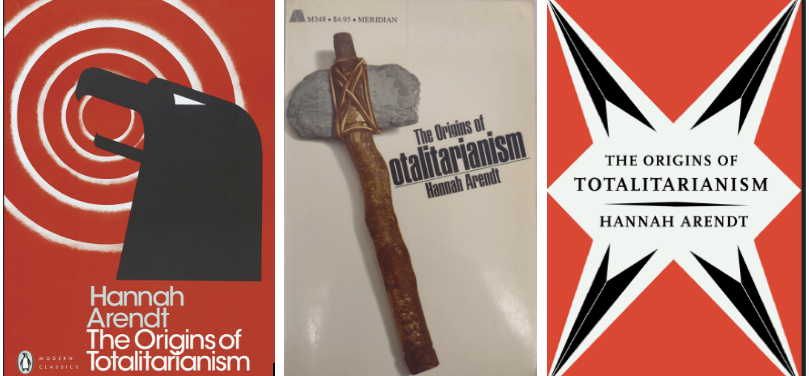
A classic work originally published in 1951; this edition has a forward by Ann Applebaum written in 1924.

I did not read the entire book in detail; in particular, I only skimmed the section on antisemetism. To me, the most interesting claim in the book is that totalitarianism owes much of its origins to colonialism/imperialsm. All that said, here is a summary of the main points of each of the three sections:

The Book

Antisemitism

Arendt argues that antisemitism is distinct from traditional anti-Jewish sentiment, and that it instead emerged from the breakdown of the nation-state system (meaning the emergence of groups of ‘stateless’ people in the wake of the breakup of Russian and the Austro-Hungarian empire, and the failure of existing states to protect basic human dignity and political membership, or even “the right to have rights”

The Dreyfus affair. The wrongful conviction and eventual exoneration of a military office suspected of treason; conviction was easy because he was jewish and unpopular. As evidence that contradicted his conviction accumulated, the affair became a political litmus test…

Arendt contends that antisemitism was weaponized by totalitarian movements to mobilize masses against the existing political order, making Jews a proxy for attacking the nation-state system itself. This is due to she argues to the influence Jews had through their financial services to the state, even while remaining politically neutral. (I would also argue that this role was facilitated by the fact that they would never be able to take or maintain power independently because of their social position).

Imperialism

  • Imperialism as “expansion for expansion’s sake,” with an aim towards empire and global domination.
  • Argues that European imperialism provided precedents/proving grounds for totalitarian methods of domination and bureaucratic control through colonial experiments.
  • Formation of a transnational capitalistic class: analysis of how economic interests transcended national boundaries, creating new forms of political organization that prioritized capital accumulation over traditional state structures.
  • Bureaucracy: Tyranny without a tyrant. “Arendt argues that bureaucracy as it developed in India, Egypt, and Algeria was a new form of government of foreign people that sought to rule and dominate them outside of legal restraints. As a non-legal government based on personal power, bureaucracy was intertwined with racism that justified the brutal colonial rule by European powers.”
  • Also, the justification for bureaucrats is typically associated with their education and intelligence, thus creating a rift between the educated elite and the uneducated masses that, for Arendt, threatens to become the new racism.

Bureaucracy

  1. Tyranny  without a tyrant
  2. Eliminating opportunities for citizen action and speech
  3. Frustration with unaccountable systems leads to violent responses
  4. Dehumanizing – reducing people to “cogs in the administrative machinery”
  5. Inscribing politics into administrative policy and mechanisms

Totalitarianism

Totalitarianism

Criteria

  • Transnational: World domination as goal. 
  • Terror as a means to subjugate the masses rather than just political opponents
  • Control via police rather than military. 
  • Domination of all spheres of life, not just political aspects. 
  • Use of a monolithic ideology as of an instrument of coercion
  • Creation of superfluous people. 
  • Novel form of government” that “differs essentially from  despotism, tyranny and dictatorship” 

Preconditions

  • Erasure of distinction between fact and fiction among the masses. 
  • Movements founded on a mass of isolated, lonely individuals

Other forms of control 

The crucial distinction is that these traditional forms maintain some structural limitations and pursue specific goals, while totalitarianism represents “a novel form of government” that “differs essentially from other forms of political oppression.

  • Despotism (as opposed to Monarchy): A form of government in which a single entity rules with absolute power,” not subject to laws; dependent on the acquiescence of the people. May be benevolent or benign. Differs from monarchy in that the monarchy is subject to rules and laws, particularly with respect to who is eligible to rule. 
  • Tyranny: Control via mutual fear — government of people, people of government for own self-interest without any legal restraint.” Aristotle’s definition states: “Any sole ruler, who is not required to give an account of himself, and who rules over subjects all equal or superior to himself to suit his own interest and not theirs…”
  • Dictatorship: Hierarchy of control using military means. Dictatorship ranges from constitutional (legitimate — temporary and subject to the rule of law) to unconstitutional (illegitimate—attained by usurpation and intended to be permanent).

Views: 29

EP#21: Seeing Voices, Oliver Sacks

*Seeing Voices: A Journey into the World of the Deaf, 1989.

August/September 2025

This is, I believe, volume 21 in the Essay’s Project; we are in the process of reading all of Oliver Sacks works. We’ve read much of his work in haphazard order, but after finishing his Letters, we decided to read those books we haven’t read in the order of publication. So far that has been Migraine, A Leg to Stand On, [skipping Awakenings which we’d already read], The Man who Mistook his Wife for a Hat, and now Seeing Voices.

About the book, briefly

This describes Sacks jouney towards understanding Deafness, something he had been hitherto ignorant of. This book — really three separate essays — was written about three years into his inquiry, so, as Sacks notes, he is not writing from a position of expertise. Nevertheless, the book gives a very interesting history of how the Deaf were treated and how their circumstances evolved from being treated as mentally deficient people to non-disabled people who, though they could not hear, used Sign to express themselves, reason, and to develop a unique culture. There is also an account of ASL as a language, and its impact on cognition in those who learn it. It’s a good book, although I think there are probably now better books if what you are interested in is understanding how ASL works.


Preface

Sacks writes that he knew nothing of the Deaf before 1986. It appears that the particular incident that started him on his journey was a request to review the book When the Mind Hears, by Harlan Lane. The request, from Bob Silvers at the New York Review of Books, was accompanied by a note: “You have never really thought about languge; this book will force you to.” Sacks writes (in the first section of the book) that he opened the book with “indifference which soon turned to incredulity.” Over time the review expanded to an essay (the first in this volume) when it appeared in the New York Review of Books in March of 1986. He writes that then Stan Horowitz of the University of California Press immediately responded to the essay and encourage him to turn it into a book. How things unfolded from there is not clear, though he visited Gallaudet later that year. It is clear that, over the three years he worked on the book, he was in dialog with leading researchers, including Ursula Bellugi, Bob Johnson of Gallaudet, and Jerome Brunner.

Continue reading EP#21: Seeing Voices, Oliver Sacks

Views: 47

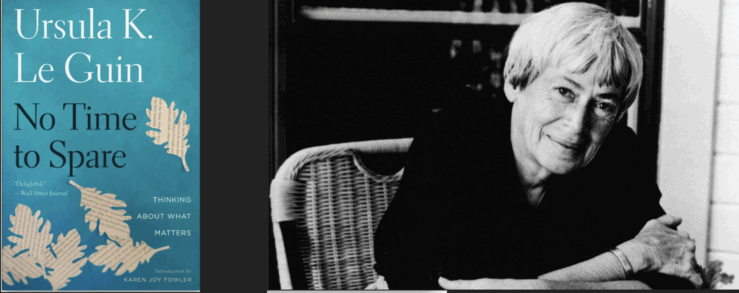
No Time to Spare, Ursula Le Guin

July-August, 2025

No Time to Spare: Thinking about What Matters, Ursula K. Le Guinn, 2017

About the Book

This is a book of essays – originally written for Le Guin’s blog – that was published in 2017. The essays were written, as best I can tell, from 2010 to approximately 2015, when Le Guinn was in her 80’s.

They are not organized chronologically, but instead in four sections separated by interludes of essays about or inspired by her cat, Pard. The four sections are “Going Over 80,” “The Lit Biz,” “Trying to Make Sense of It,” and “Rewards.” The essays are written in a casual voice, and are more notable for their ideas than their word-crafting.

I found the book engaging, and am happy to have read it. I say a bit my favorite essays – there are over three dozen in the book — and * my favorites of the favorites.

Favorites

The Diminished Thing

“What to make of diminished thing?” (Robert Frost’s Ovenbird). Le Guin discusses old age – she is in her 80’s at this point – and argues against the notion of ‘You are only as old as you think you are,’ and the tendency of younger people to deny that their elders are old.  Le Guin disagrees: “To tell me my old age doesn’t exist is to tell me I don’t exist. Erase my age, erase my life – me. …So it is that old men come to learn the invisibility that women learned 20 or 30 years earlier.”

Le Guin also writes about respect: 

“…the social requirement of respectful behavior to others, by reducing aggression and requiring self-control, makes room for understanding. It creates a space where understanding and affection can grow.”

–ibid., p. 15

Le Guin’s answer to the ovenbird’s question is “a lot.” At least if one is fortunate. And, she adds, don’t dimmish old age by trying to deny it. 

Would You Please Fucking Stop

A funny rant against the tendency to use only variants of “fuck” and “shit” for emphasis. 

* Having My Cake

(1600 words)

…A great essay, and one that I believe will, for me at least, repay study, since I am trying to learn how to write interesting short essays.

She begins admitting that for a long time she didn’t understand the proverb about not being able to have your cake and eating it too. How can you eat a cake you don’t  have, she asks? She also notes that this proverb, and others like it, are used to test whether people are mentally ill, and wonders about her sanity. But then she slowly realizes that “have” is really being used to mean “keep,” and decides it’s a good proverb, though she back tracks a bit, analyzing the language and why it might be found confusing. This translates into a more general medication on language, and her writerly fascination with it. And then she ponders the parallels between her fascination with words, and artists’ fascination with the materials with which they work, though she is uncertain about the degree to which they hold. But finally, at the very end, she brings it back to cake: 

“Words are my matter, my stuff. Words are my skein of yarn, my lump of wet clay, my block of uncarven wood. Words are my magical anti-proverbial cake: I eat it, and I still have it.”

ibid., p.52

Papa H

Nothing much to say about this essay, but that it was an enjoyable mediation of The Illiad and The Odyssey as exemplars, or perhaps archetypes, of the two basic fantasy stories: The War; and The Journey.

The Narrative Gift as Moral Conundrum

A mildly interesting essay, but I loved her comments on the difference between story and plot:

I have a high opinion of story. I see it as the essential trajectory of narrative: a coherent, onward movement, taking the reader from Here to There. Plot, to me, is variation or complication of the movement of story.

Story goes. Plot elaborates the going.

Plot hesitates, pauses, doubles back (Proust), forecasts, leaps, doubling or tripling simultaneous trajectories (Dickens), diagrams a geometry onto the story line (Hardy), makes the story Ariadne’s string leading through a labyrinth (mysteries), turns the story into a cobweb, a waltz, a vast symphonic structure in time (the novel in general) …

ibid., p. 75

Rehearsal 

A very short essay on drama and stagecraft inspired by watching a rehearsal of a play based on The Left Hand of Darkness.People you thought you’d made up, imagined, invented, are there, not” Performing a play is, Le Guin argues, essentially an act of ritual or magic: “They collaborate methodically (ritual must be methodical) … Essentially they do it by limiting space, and moving and speaking within that space.

*Without Egg

(1100 words)

A description of an incident, during a visit to Vienna in the early 1950’s, where Le Guin distressed a waiter by saying that she didn’t want an egg with her breakfast. Her reflections on why this was disturbing are interesting, but where the essay shines is in her beautifully detailed description of how she goes about eating a soft boiled egg. She describes the egg, the egg cup, the spoon, the opening of the egg, and the process of eating it.

First Contact

An essay on an encounter with a rattlesnake, and the process of humanely transporting it elsewhere.

This time was outside ordinary time, and outside ordinary feelings; it involved danger for both of us; and it involved a bond between creatures who do not and cannot ordinarily relate to each other in any way. Each would naturally try not to relate – to just get away – or to kill in self-defense.

–ibid., p. 199

Notes from a Week at a Ranch in the Oregon High Desert

These are really notes, as the title says, rather than an essay. But I find it a nice example of how, perhaps, I might take notes during my travels. Le Guin’s notes, while not a narrative, have a bit more structure and connectivity than mine typically do. They capture images, and often there is enough to infer some of the activities going on.

Some nice writing:

  • the cool shadowed air between the eastern and western rimrock
  • the warm towers of air
  • the old tall poplars holding darkness
  • I sit in windy shadow
  • The hens pay no attention, scattering out, scudding along like sail boats over grass
  • behind the ridge that darkens as brightness grows

Views: 29

On Solitude*, Michel de Montaigne

* On Solitude, Michel de Montaigne (Penguin Books, 1991, trans. M. A. Screech)

This is the first time I have read Montaigne, a little surprising since he is the originator of the essay form. I am not sure whether I will appreciate him…

Later: Montaigne’s essays are just not engaging me. But I am struck by the way he is engages in dialog with scholars and others who have come before. I don’t really resonate with the topics and language in play, but it would be interesting for me to try to do something similar with people who have influenced me.

E1: On Solitude

This eponymous essay Is written from the vantage point of a man in the “tail-end of life,” and explores the virtues of solitude. I was struck by how much, and how widely, he quotes from the classical literature. Hoarce, Seneca, Cicero, Erasamus, Socrates. The general theme is about the advisability and wisdom of withdrawing from public life, and the vices attendant in that and in the majority of people. Instead, he advocates turning inward, and cultivating one’s own happiness and virtue in a what seems to me a stoic fashion. This essay did not, in general speak to me, though there were a couple of quotes I liked. 

“We have lived quite enough for others; let us live at least this tail-end of life for ourselves. Let us bring our thoughts and reflections back to ourselves and to our own well-being”

ibid. On Solitude, p. 9

“If a hangover came before we got drunk we would see that we never drank to excess: but pleasure, to deceive us, walks in front and hides her train.

ibid. On Solitude, p. 9

On Books

TBD

On the Power of the Imagination

TBD

On Sadness

TBD

On Constancy

TBD

On Fear

TBD

How Our Mind Tangles Itself Up

TBD

On Conscience

TBD

On Anger

TBD

On Virtue

TBD

On Sleep

TBD

On the Length of Life

TBD

How we Weep and Laugh at the Same Thing

TBD

# # #

Views: 51

EP#20: The Man Who Mistook his Wife for a Hat, Oliver Sacks

* The Man Who Mistook his Wife for a Hat, Oliver Sacks. 1984

The 20th volume in the Essays Project (co-reading with CT) gets us back to essays. Here we are continuing our side quest to read all of OS’s work. This is Sack’s fourth book, and its excellence is consistent with my belief that Sack’s somehow found his muse — at least for writing for general audiences — while writing A Leg to Stand On, his previous book. Hat, so far, seems to be about various forms of agnosia — the loss of knowledge or awareness of things. So far this includes face and object recognition, awareness of limbs (or the entire body), and portions of the visual field. Looking ahead, I now see that only the first section is on “Losses,” so there will clearly be a much wider variety of ‘neurographies.’

The Book

Preface to the Original Edition (1985)

There is also a 2013 Preface, but I find little of note, though if you are reading the book it is worth a quick perusal.

Sacks begins the 1985 Preface by reflecting on his epigraphs, which has to do with his practicing medicine as a physician also involving getting a view of the larger context of his patients’ troubles — he sees himself as as much as naturalist as a physician. He also says, interestingly, that: “animals get diseases; only man falls radically into illness.” In my view, this reflects his view that some (all?, almost all?) diseases have an ontological component. I love the comment in one of his letters: “What is so instructive about disease, like disaster, is that it shakes the foundations of everything.” He also discusses the value of broad accounts, even stories, and laments the modern tendency to eliminate or minimize the subject of ‘case histories:’ “To restore the human subject at its center — the suffering, afflicted, fighting human subject — we must deepen a case history to a narrative or tale….” (p. xviii) He also brings in myths and fables with their hero’s and archetypes — “travelers to unimaginable lands, lands of which we should otherwise have no idea or conception.

Continue reading EP#20: The Man Who Mistook his Wife for a Hat, Oliver Sacks

Views: 255

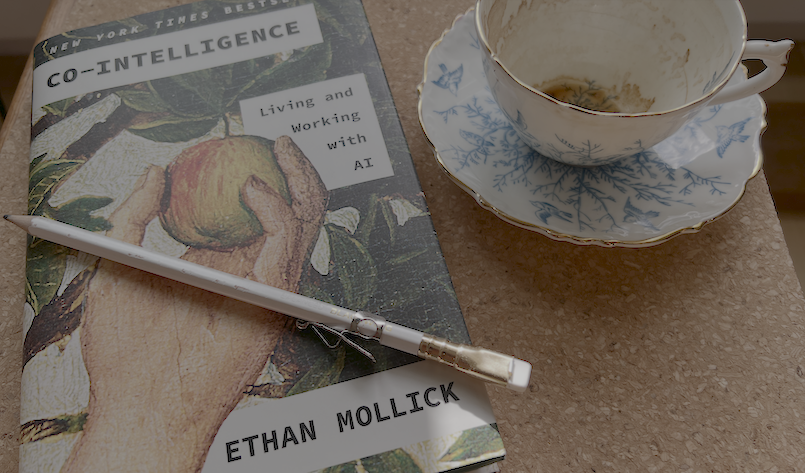
Co-Intelligence*, Ethan Mollick

Co-Intelligence: Living and Working with AI, by Ethan Mollick. 2024

About the Book

I read this for my book club. It’s a well-written book, relatively hype-free, and very much worth reading for those who don’t know much about AI. I felt it was a bit verbose, but that might be appropriate for the more general audience he is trying to reach. I did not learn a lot from the book, but then I’ve been following the discourse on LLMs for a long time, and have also been getting Mollick’s newsletter in my in-box, so this is neither surprising nor a mark against the book.

But now I’ve gone through my various marginalia and underlining, and feel that I got more out of the book than I had realized when I wrote the previous paragraph. A few of the high-water marks for me:

  • The fourth ‘rule’ – assume this is the worst AI you will ever use – is a good reminder. We are used to software improving at a glacial pace, but that may not be true of LLMs. [C3]
  • I appreciated the confirmation of my belief that an AI cannot track the reasons for its responses, and that any explanation of a response is a hallucination. [C5]
  • It made me think more (in [C9]) about the consequences of the erasure of digital groundtruth by generative AI, and how that will undermine public confidence in ‘facts’ as presented online. Perhaps everyone will retreat into their own filter bubbles; or perhaps there will be a turn towards traditional curated media (though the phenomenon of Fox news makes this seem unlikely).
  • An interesting argument is that the speed of innovation has been dropping 50% every 13 years), presumably because one must know more and more to make progress. Perhaps AI can provide a remedy here.

That said, I didn’t think Mollick did a great job of delving into the potential of AIs to enable people to educate themselves. There is much to be said about the pros and cons of using AI in this way (e.g., AIs creating study guides, problem sets, etc.) Little of this is discussed.

Chapter by Chapter Notes

C!: Creating Alien Minds

  • A brief history of AI, particularly the way it is used in business; a slightly more in-depth history of the rise of LLM’s and generative AI.
  • An introduction to the Transformer architectures with its ‘attention mechanism’ and the resulting LLM’s
  • An interesting note on whether LLM’s violate copyright or not, since the LLM does not contain text, just weight-vectors.
  • A mention of RLHF — Reinforcement Learning from Human Feedback. This is how LLM’s are ‘taught’ to avoid certain topics.
  • Some good examples of how slightly changing prompts can significantly change the response of the LLM.

C2: Aligning the Alien

  • Discussion of various ways in which AI can have detrimental impacts
  • More discussion of RLHF and guardrails, and how guardrails have been circumvented.

C3: Four Rules for Co-Intelligence

Didn’t learn anything here, but mainly because I’ve been experimenting myself and following Mollick’s newsletter. He also had a not unreasonable piece of advice: “Become the world expert in how to use AI to do a task you know well.

For the record, the four rules are:

  • Always invite AI to the table
  • Be the human in the loop
  • Treat AI Like a Person (but tell it what kind of person it is)
  • Assume this is the worst AI you will ever use

This is not bad advice. I particularly like the last rule.

C4: AI as a Person

A discussion of how AIs can appear to be sentient. Possibly a useful for those who have never interacted with an LLM, but otherwise I don’t think the chapter did much in the way of making useful points. Not sure that there are useful points to make here.

C5: AI as a Creative

  • Returns to the point that LLMs don’t store text, they only store weights. So in a sense they don’t know anything.
  • Nor can they actually give a real account of why they gave a particular answer, though of course they can generate a plausible explanation. This seems like an important thing for people to understand.
  • LLMs are trained on text. The training does not take quality into account; it does not even distinguish between fiction or non-fiction. All it is doing is learning weights.
  • We are back on the topic of hallucination, a term I very much dislike. But it does make a good point, which hadn’t sunk in for me: “Anything that requires exact recall is likely to result in a hallucination.”
  • And this is a nice quote:

It [an AI] is not conscious of its own processes. So if you ask it to explain itself, the Al will appear to give you the right answer, but it will have nothing to do with the process that generated the original result. The system has no way of explaining its decisions, or even knowing what those decisions were. Instead, it is (you guessed it) merely generating text that it thinks will make you happy in response to your query. LLMs are not generally optimized to say “I don’t know” when they don’t have enough information. Instead, they will give you ananswer, expressing confidence.

—Ethan Mollick, Co-Intelligence, p 96

  • A lot of talk about creativity, which did not interest me.
  • Cites studies (his own? and colleagues?) that show that using AI greatly decreases the time to perform creative tasks. …I agree this is likely.
  • Makes the interesting point that ‘ceremonial tasks,’ such as writing recommendation letters, are likely to be rendered meaningless, or at least greatly reduced in value, as the letter no longer necessarily represents a significant time investment.

C6: AI as a Coworker

  • Distinguished between jobs and tasks — AI may radically change the way job-related tasks are carry out, but may not necessarily eliminate the job.
  • Argues that the systems within which a job takes place play a crucial role in shaping the job — but I don’t think the argument is taken very far re implications….
  • Discusses different types of tasks: delegated tasks, and automated tasks. And different types of workers: Centaurs (with a clear strategic separation of tasks) and cyborgs (a more blended approach).

C7: AI as a Tutor

  • Talks about using AI in education. Uses example of introduction of calculators in classrooms to think about this. I suspect some readers will find this very useful.
  • Talks about flipped lectures and how AI might be used in the classroom.
  • A rather disappointing chapter: I think there is huge potential in individuals using AI to educate themselves, and a lot to be said about the pros and cons of using AI in this way. There is also the prospect of AIs creating study guides, problem sets, etc. None of this is discussed.

C8: AI as a Coach

  • Begins with a favorite point of mine about the danger of AI eliminating the on-ramps to expertise — it can do the tasks that were formerly assigned to interns, and eliminate the possibility of apprenticeship.
  • Offers the prospect of AI’s as coaches that will help novices and journeymen do the difficult reflective practice that builds expertise. Interesting, but he is just making all this up, as far as I can tell.
  • Cites a study of his own that claims that the quality of the middle manager explains 20% of the revenue that a video game eventually produces. This would be a very difficult study to operationalize, and I’m a bit skeptical. But hard to say since I don’t understand how video game companies work, or the role middle managers play in them.

C9: AI as our Future

This chapter offers four scenarios on the future of AI (==LLMs)

  • 1. As Good as it Gets.
    AI will not improve significantly from here on out, either because of technical limitations (running out of text to train on), or because of regulatory intervention. He argues that this isn’t a very likely future, but it is what most people and organizations are planning for. I agree that regulation is unlikely; less sure about the certainty of significant improvement.
    • Makes the point (not sure why it is relevant to this scenario) that the erasure of digital groundtruth will undermine public confidence in ‘facts’ as presented online. Perhaps everyone will retreat into their own filter bubbles; or perhaps there will be a turn towards traditional curated media (though Fox news makes this seem unlikely).
  • 2. Slow Growth.
    The exponential growth in AI capability will slow to 10%-20% a year. He cites various reasons for this, from cost of training, to technical limits for large LLMs (apparently LeCun, chief AI person at Meta has argued this), and my own favorite, not-enough-high-quality text. In this scenario, tasks will change more than jobs, and more jobs will be created than destroyed.
    • In my view it may be that LLM’s have ‘used up’ the supply of high quality information, and trying to train LLMs on broader swaths of material will introduce ‘semantic pollution.’
    • Mollick also talks about the decline in the ‘speed of innovation’ (dropping by 50% every 13 years), and the fact that most major scientific contributions are made by scientists over 40 (whereas the opposite used to be the case). You must know more to make progress, and that slows progress. He suggest that perhaps AI can help here.
  • 3. Exponential Growth. In this scenario the speed of AI growth continues. AI-assisted hacking, targeted marketing, AI-assisted law enforcement (and military, which, interestingly, he does not address) proliferate, and government policies/regulations can not keep up. But maybe AI and robotics eliminate the need for a lot of human work, and things like basic income, shortened workweek, and so forth usher in a post-scarcity economy.
    • He also comments on AIs becoming better and more interesting companions than other humans, and the possibilities of a decrease in loneliness, but a rise in new forms of social isolation.
  • 4. The Machine God. AI becomes sentient. There is not a lot to say here. Could be horrible, could be wonderful.

Afterword: AI as Us

Brief essay on how AI has grown out of our knowledge, includes our own biases, etc, etc. Not very interesting.

# # #

Views: 163

A Leg to Stand On, Oliver Sacks

June 2024

The 19th volume we’ve read in the increasingly poorly named Essay Project, this being (another) book that does not contain essays. But we’ve become fascinated by O.S. from reading his two autobiographies and the edited collection of his letters, and just can’t stop.

About the Book

This is the third book that Sacks published (1984), following Migraine and Awakenings. To me this is the book where he found his narrative voice, or at least the voice that has proved so engaging to non-medical readers. It is a breakthrough in his writing style. And it is a gripping narrative, with lucid and beautiful writing. Gone are the clinical passages and case histories that were interspersed throughout his first two books. It will be interesting to see if his subsequent  ‘neurographies’ continue in this more narrative and engaging voice. 

Continue reading A Leg to Stand On, Oliver Sacks

Views: 36

Migraine*, Oliver Sacks

*Migraine (Revised and expanded), Oliver Sacks, 1992

This is the 18th volume in the “Essays Project.” While the Essays Project has focused mainly on essays, we became intrigued with Oliver Sacks and are taking something of a detour to read his complete work, essays or not.

[[More to come…]]

Front Matter

There are prefaces to the original edition, and, to this, the 1992 edition. There is also a forward by William Gooddy, a migraine specialist whom Sacks praises in his prefaces. There is also a historical introduction, which summarizes over 2,000 years of medical writing on migraine; I will pass on summarizing this.

The following, from the ’92 Preface, is Sacks’ comment on the aims of the book; I think his thoughts on why humans may need to be ill, for a brief time, will be very interesting.

Migraine, of course, is not just a description, but a meditation on the nature of health and illness, and how, occasionally, human beings may need, for a brief time, to be ill; a meditation on the unity of mind and body, on migraine as an exemplar of our psychophysical transparency; and a meditation, finally, on migraine as a biological reaction, analogous to that which many animals show.

–Oliver Sacks, Migraine, xv

Continue reading Migraine*, Oliver Sacks

Views: 25

How to Do Nothing…, Jenny Odell

*How to Do Nothing: Resisting the Attention Economy, Jenny Odell, 2019

I found this book to be quite a disappointment. For the most part, it is not about the attention economy; nor does it say much about how to resist it. It is really just a lament about the state of late-capitalist-resource-extrative-modernism. And while there is certainly much to lament, I don’t really find much in the way of strategies on how to resist the various forces that are having such negative effects on the environment and world.

The book seems very undisciplined — or perhaps self-indulgent — to me. It meanders from polemical to anecdotal. In the smaller potion of the book that did seem to be about the attention economy, I was bemused by the author’s inclination to delve back into history (quoting Seneca for example), but not recognizing that the ability to reach so far back to find apropos material suggests that the malaise that she is investigating seems to have been present, at least in the west, for centuries.

A bit cynically, I wonder if the publisher insisted she tack on the ‘Attention Economy’ bit of the title to garner attention and thus up sales. To my eye the book is more about mindfulness and focus, and while I actually am in sympathy with many of the ‘lessons,’ I can’t say I learned anything. Mostly, when the book turns to the entrancement of people by Twitter or Facebook or some other form of broadcast media, I want to say, ‘Come on, just get a grip. Show a little character and self-discipline by recognizing that you don’t like the way this slice of the media is effecting you, and do something different.

And speaking of the media, it seems to me that much of what Odell inveighs against not digital media in general, but broadcast media like Twitter and Facebook. It is a failure of analysis to fail to differentiate among media (digital or otherwise) that work in different ways, and shape discourse in different ways.

Later in the book she takes on the notion of western ‘progress’ — which she somehow ties to the attention economy — and the damage that technodeterminism and extractive capitalism have done to environment. And it has done damage, but she does not offer any convincing or compelling remedies, other that to suggest a label — “manifest dismantling” — for the various efforts to mitigate or reverse eco-system damage that have been in play for decades.

I could go on, but it feels like too much work to try to distill crisp arguments from her prose and then critique them.

# # #

Views: 23

Parable of the Sower, Octavia Butler

(with a a little bit on the sequel, Parable of the Talents)

May 2025

I read this book for the Elle Cordova SF book club; it is number 3 in the sequence. I was familiar with some of Butler’s earlier work, the Xenogenesis stories, which I liked, and at some point had read Parable of the Sower, which I did not care for.

To step back a moment: Octavia Butler is justly lauded for her impact on late 20th century and later science fiction. Though by no means the first black author to make a name in the genre (Samual Delany is, I think, the progenitor), she is among the first to really foreground themes related to black experience — characters experiencing racism, dominance/repression, resistance/survival, and (loss of) bodily autonomy. As I write this, I balk, because I am by no means a scholar of SF, and so I should preface the foregoing with “In my limited experience.”

In re-reading Sower, I found myself recapitulating my initial unfavorable reactions. The first being, ‘I don’t think this is really science fiction.’ [Clearly SF writers disagreed with me, as this novel was awarded a Nebula.] Still, it seems like a straight-forward post-apocalyptic novel — I was going to write, “in the vein of Cormac McCartney’s The Road — but on pausing to look it up, I find that this pre-dates Road by at least a decade. I didn’t care for The Road, either, so at least I am consistent here. In both cases, we don’t have much in the way of science happening, just an extrapolation of current trends that are leading / have lead to the breakdown to the climate, environment and society, and protagonists living off scavenged food amid a world filled with violent and destructive bands. Sower does give its protagonist, an odd disability/delusion called hyperempathy caused by a mother’s use of a drug during pregnancy, but, although complicating life for the protagonist, this problem does not seem to me to fundamentally shape the story.

My second unfavorable reaction has to do with the unrelentingly grim world of the book. The closest the book gets to hopefulness are a few periods of stability in the midst of a long, seemingly inevitable decline, which the protagonist tries, inadequately, to prepare for. Of course, this is perhaps a realistic portrayal of the challenges we face, but it does not make it a fun read (except, perhaps, in contrast to its sequel Parable of the Talents, which is grimmer.

It is true that the book suggests that kindness and inclusiveness is at least a middle-term effective strategy, and that people can overcome interpersonal obstacles to work together. It also posits an interesting belief system — essentially a new religion being constructed by the principal protagonist — that, it is argued, is more suited to the needs of the post-apocalyptic world,.

The belief system is called Earthseed, and its central tenant is that God is Change. It argues both the one can not resist change, but that one can, in small ways, shape the change. The evolution and spread of this religion is described in the second book, “Parable of the Talents.Talents is, as noted, even less of a pleasant read than Sower, but it does provide closure for Sower in the establishment of Earthseed as a widespread belief, though that occurs quite rapidly in the last few chapters.

The book is thoughtful and well-written, but I’m still not convinced that it should be called science fiction…

# # #

Views: 50

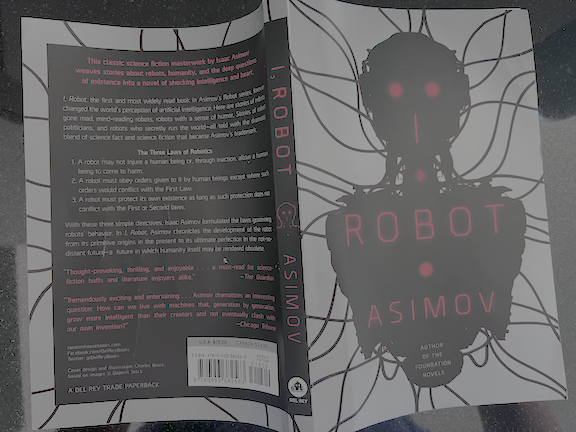
I Robot, Isaac Asimov

It is possible I read this over five decades ago, but if so, I don’t recall any of the stories. I know I read some ‘three laws’ stories, but that may have been in some other book/collection, possibly Caves of Steel. I read this because it was a pick for Elle Cordova’s SF Book Club, even though this one was picked and discussed before I joined. But, I was curious as to how I’d experience this very old story (circa 1950), and probably a little motivated by the ‘collect-the-whole-set’ phenomenon, as I picked up the book club on its second book.

Though I don’t remember any of these stories in particular, Asimov’s three-laws stories are sort of a one-trick pony: there is some kind of mystery or inexplicable event involving a robot, and the resolution turns on realizing that the three laws are not being interpreted or executed as intended, and thus the problem is that the robots are being too literal. Thus, in one story, a robot lies to various humans in the story because it is telepathic and knows what they want to hear, and so it can’t tell them the truth because that would ‘harm’ them. So, they are all essentially puzzle-stories.

Asimov’s characters are not terribly well developed. It feels as though he has carefully chosen a stereotype for each, and few physical or behavioral features of each character as a synecdote for their individuality. We’ve got the hot-headed, angry red-headed Irish engineer, and his cool and more reflective partner. And of course, Susan Calvin, the brilliant but plain woman who has repressed everything but her mind to make it in the world of science. But kudos to Asimov for creating a central female character in the 1950’s, and making her as well developed (which is to say, not very) as any of the male characters.

If these stories are from the golden age of science fiction, they are also from the golden age of smoking — it is astonishing, to 21’st century eyes, to see how many people smoke, even on space ships. It is also interesting — and characteristic of the time of writing — to find that unions have played a significant role in keeping robots off of earth and out of the workforce, as have religious movements.

I wondered reading these stories would whet my appetite for more of Asimov’s robot books, but the answer is no. Although, it could be interesting to read some of the other books where more modern writers — David Brin being one — filled in some of the gaps in Asimov’s world.

# # #

Views: 103

The Catalyst: RNA…*, Thomas Cech

*The Catalyst: RNA and the Quest to Unlock Life’s Deepest Secrets, Thomas R. Cech, 2024. Cech won the Nobel Prize in Chemistry in 1989 (with Sidney Altman) for the discovery of the catalytic properties of RNA, which means that in addition to carrying genetic information, RNA could also act on other molecules.

Reading this with the inaccurately-named “26-minute book club” in the Spring of 2025.

Continue reading The Catalyst: RNA…*, Thomas Cech

Views: 100

When the Moon Hits your Eye, John Scalzi

A new SF novel by John Scalzi. The premise is that all of a sudden, with no warning or explanation, the moon turns into cheese. This has various ramifications, and the novel — which hasn’t much of a plot — is how various people react to this event, and its consequences.

I did not care for it. In fact, it is by far my least favorite Scalzi. I will be surprised if many people do, though of course Red Shirts won a Hugo even though I didn’t like it.

# # #

Views: 6